
No products in the cart.
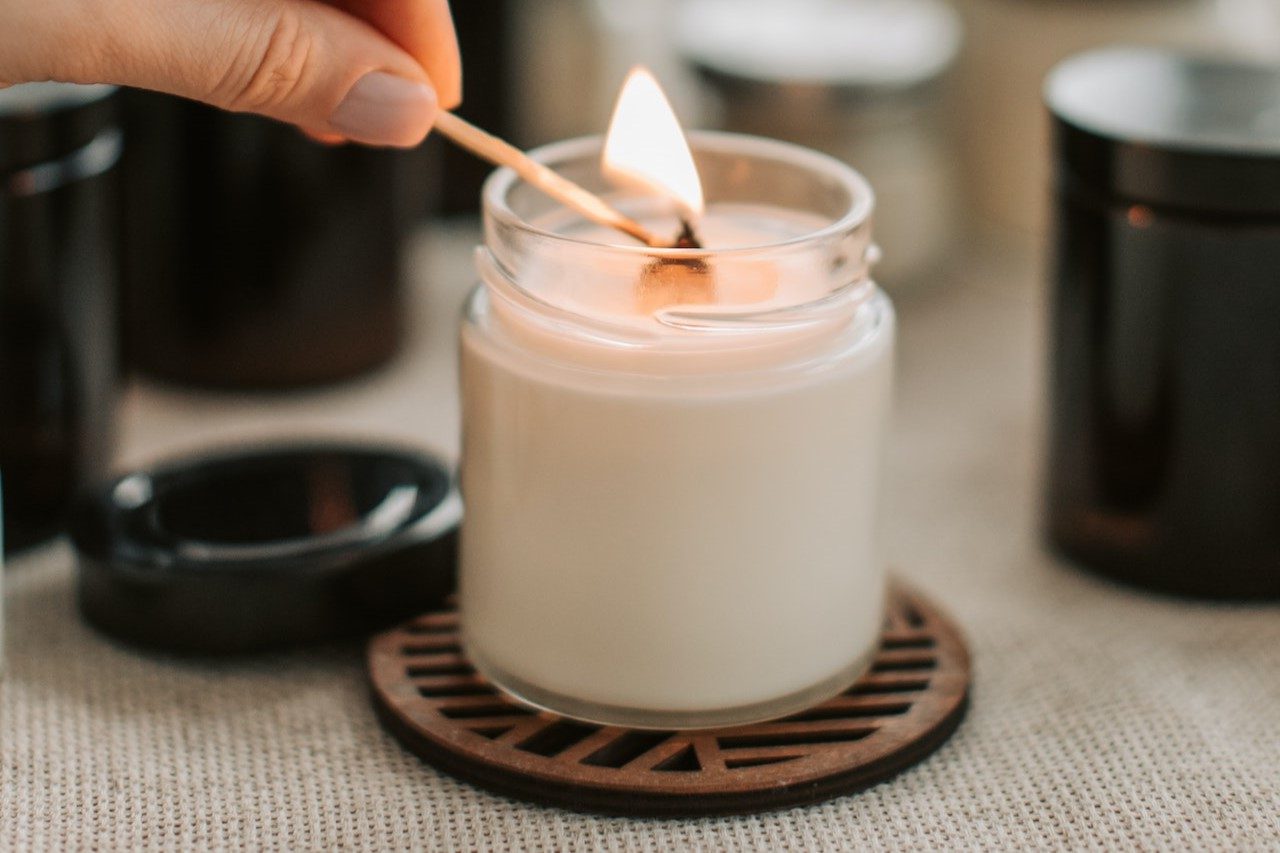
Lighting a new candle for the first time is something most of us do without much thought. Strike a match, enjoy the fragrance and blow it out when you’re finished. Simple enough.
But you’ve probably heard that the first burn is particularly important, or that a candle has something called “wax memory”. There’s some useful advice behind the idea, although it’s not quite as strict as it’s sometimes made out to be.
What is candle memory burn?
The term memory burn describes the first time you light a candle and allow a pool of melted wax to develop around the wick.
There’s a popular belief that wax remembers how far it melted during that first burn. In reality, wax doesn’t have a memory. What can happen is that repeated short burns gradually create a hollow around the wick, leaving higher walls of unmelted wax at the sides.
Once that hollow becomes deep enough, the surrounding wax can become increasingly difficult to melt. This is known as candle tunnelling.
Allowing enough time for a healthy melt pool to develop helps reduce the chances of this happening.
How long should you burn a candle for the first time?
It depends on the candle’s size and design. A small candle may develop a broad melt pool relatively quickly, while a larger container will usually take longer.
As a general rule, it’s sensible to allow enough time for the wax to melt across most of the surface. However, you should never exceed the manufacturer’s recommended maximum burning time simply to make the wax reach the glass.
And don’t worry if a thin ring of solid wax remains around the edge after the first burn. Some properly made candles behave this way, with the remaining wax melting during later burns.
How to get the first burn right
There’s no special technique involved, but a few habits can help:
- Check the wick. Trim it to the manufacturer’s recommended length before lighting.
- Choose a suitable position. Place the candle on a stable, heat-resistant surface away from draughts and anything flammable.
- Allow enough time. Light your candle when you can enjoy it for a reasonable period, rather than just a few minutes.
- Watch how it burns. The flame should be reasonably steady, without excessive smoke or signs of overheating.
- Let it cool. Extinguish the candle within its recommended burning time and allow the wax to solidify before moving or relighting it.
Remember never to leave a burning candle unattended, even if you’re waiting for the melt pool to develop.
What if you blew out your candle too soon?
Don’t worry. Extinguishing a candle after twenty minutes doesn’t automatically ruin it.
The next time you light it, allow a longer burning session within the manufacturer’s instructions and see how the wax melts. A small depression around the wick may disappear naturally.
If the candle develops a deep tunnel over repeated burns, that’s a different matter. You can read about the causes and possible remedies in our guide to fixing candle tunnelling.
The first burn is worth paying attention to, but there’s no need to treat it as a one-time test you must get absolutely perfect. A well-made candle should perform properly over its full life, not depend entirely on what happened the first evening you lit it.


About author

Related posts

Black glass is soot. Trim the wick, move it off the draught, wipe the jar. It is not the fragrance’s fault. Continue reading
Wet spots are air between wax and glass. They look like a fault. They are not. The candle will still burn. Continue reading

Candles do not expire like milk. They fade, they dust, they bloom. Most of them are still fine to burn. Continue reading

Cold throw is the lid sniff. Hot throw is the room. They are not the same, and soy is often quieter on the lid. Continue reading

Do not pour leftover wax down the sink. Melt it out, make a firelighter, or bin it. The glass can have another life. Continue reading