
No products in the cart.
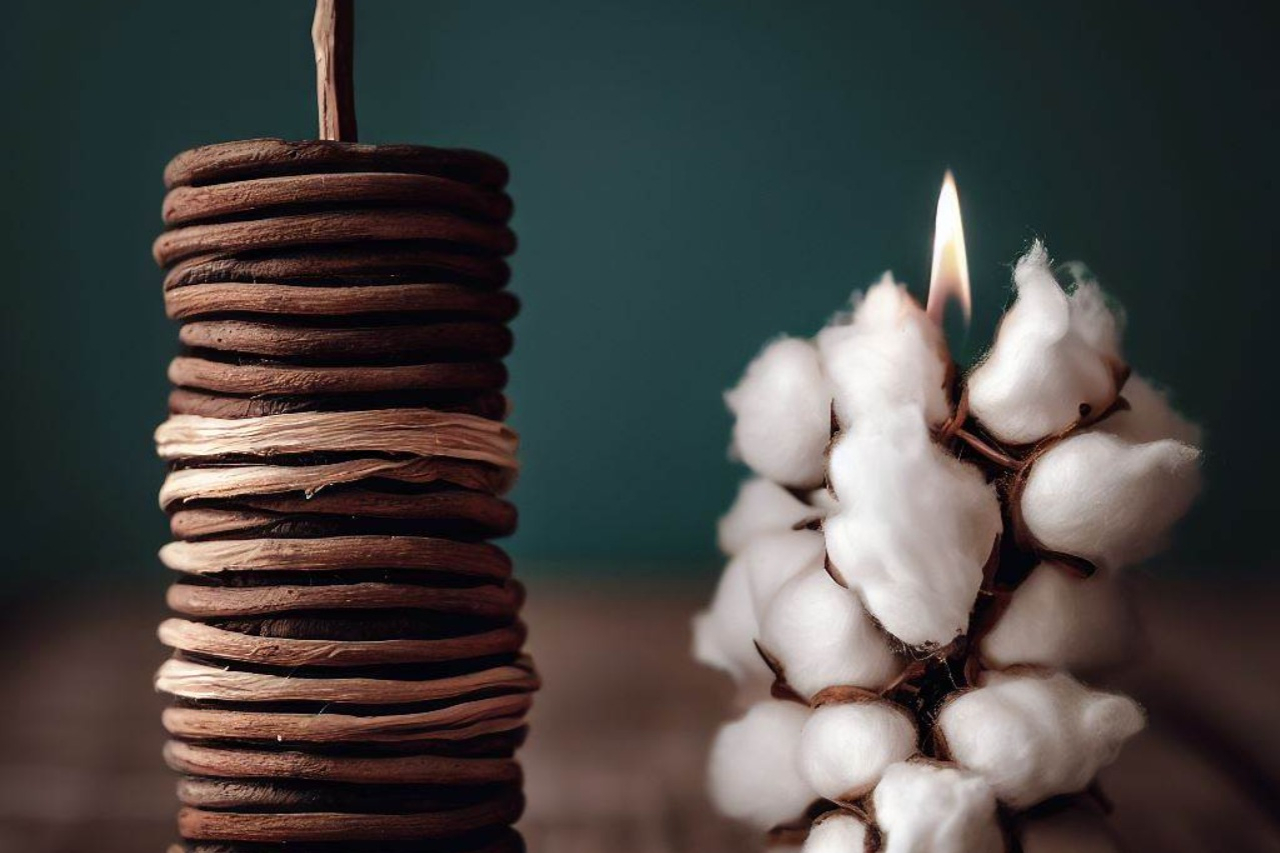
Cotton wicks are a braid that bends over in the flame and burns a steady pool. Wood wicks are a thin strip of wood that crackles and throws a wider, often louder, flame. Neither is morally superior. They suit different jars and different waxes.
We use cotton in our soy-coconut landscape candles. Wood looks lovely on Instagram and is fussy in a narrow glass.
Cotton
Predictable. Easy to trim. Works in smaller jars. In soy-coconut — which is softer than paraffin — a cotton wick of the right size will reach the glass without roaring. Failures we see: wick too small (tunnel), wick too big (soot, mushrooming, hot jar).
Cotton also “mushrooms”. Trim it. That is not a defect, it is carbon.
Wood
The crackle is real. So is the maintenance. You need a clean edge every time or it will not light. It likes a wide vessel so the extra heat has somewhere to go. In a small tumbler it can tunnel or smoke. Wood also hates draughts even more than cotton — the flame leans and you get a burnt notch on one side.
Some wood wicks are sandwich (wood plus a booster). They are easier to light and easier to overheat. Treat them like a bigger cotton wick, not like a campfire.
Scent throw
Throw comes from melt-pool size and wax temperature, not from the romance of the wick. A wood wick in a wide tin will often throw harder because the pool is bigger. The same wick in a narrow glass can throw less than cotton because the pool is a messy oval. Judge the pool, not the material. Hot and cold throw is the longer version of that.
What we pour
Cotton, soy-coconut, landscape scents. If you want the hill in a jar, that is Cairngorms or Nevis, not a crackling gimmick.


About author

Related posts

Faster burn is usually a bigger wick, a wider pool, or a draught. Not a secret cheap wax. Continue reading
Five millimetres. Longer and it soots. Shorter and it drowns. Read the flame, not the myth. Continue reading

The wick is chosen for the jar and the wax, not for the label. Too small tunnels. Too big soots. Continue reading

Trim to about 5mm before you light it. That is most of candle care in one move. Continue reading

Double wicks are for wide tins. In a tumbler they are showing off. One correctly sized wick is the job. Continue reading