
No products in the cart.
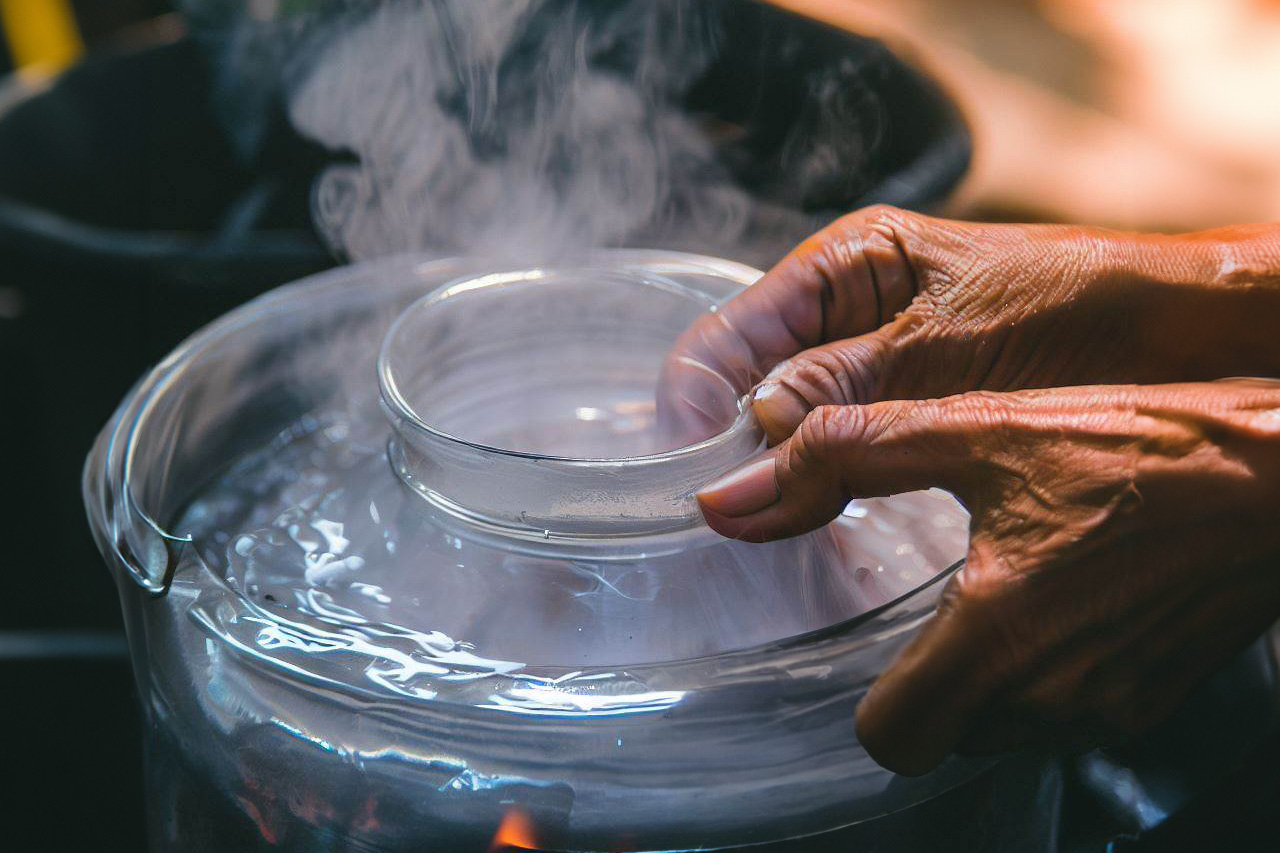
One popular trick for removing leftover candle wax is to pour boiling water into the jar, wait for the wax to float to the surface, then lift it out once it has hardened.
It can work, but there’s a catch. Not all candle jars are designed to withstand sudden temperature changes, and pouring boiling water directly into the glass can cause it to crack or even shatter.
Fortunately, there’s a gentler way to use warm water to loosen stubborn candle wax without exposing the jar to such extreme heat.
Why does boiling water remove candle wax?
Most candle waxes are less dense than water, which is why melted wax tends to float.
When hot water is poured into a jar containing leftover wax, the heat can melt or soften the wax. Some of it may rise to the surface, where it forms a solid layer as everything cools.
The problem isn’t whether the method works. It’s the temperature of the water and how the glass responds to being heated so suddenly.
A candle jar may be designed to withstand the heat of a burning candle, but that doesn’t automatically mean it’s safe to fill with boiling water.
A safer way to remove candle wax using hot water
Rather than filling the candle jar with boiling water, you can try gently warming it from the outside. Only use this method with an undamaged, heat-resistant container where the manufacturer permits this type of cleaning.
- Let the candle cool completely. The wax should be solid and the glass at room temperature before you begin. Check for cracks or other damage.
- Prepare a heat-resistant bowl. Place the candle jar upright inside a suitable bowl on a stable surface.
- Add hot, not boiling, water. Carefully pour water at approximately 50–60°C into the bowl around the outside of the jar, reaching no higher than halfway up. Keep water out of the candle itself.
- Allow the wax to soften. Leave the jar undisturbed for a few minutes. The warmth may loosen the wax around the sides and bottom.
- Remove the leftover wax. Once everything has cooled enough to handle safely, gently lift out the loosened wax using a spoon or other blunt utensil. Don’t force it or scrape the glass with a sharp knife.
- Clean the container. Remove the wick holder if it has loosened, wipe away remaining wax with kitchen paper, then wash the empty jar with warm soapy water and dry it thoroughly.
Be careful when handling hot water and glass. If the wax remains firmly attached, don’t force it. Some waxes and containers respond better to other removal methods.
What should you avoid?
There are a few things worth remembering when cleaning an old candle jar.
- Don’t pour boiling water directly into a cold glass jar.
- Never use a sharp knife to prise wax away from the glass.
- Don’t put a candle jar in the microwave, particularly while the metal wick holder is still attached.
- Never pour melted wax down the sink. It can harden inside the plumbing and cause blockages.
- Don’t reuse a cracked or damaged candle container.
Once the wax has been removed, you can dispose of it in your general household waste or consider reusing it if it’s clean and suitable. We’ve covered a few possibilities in our guide to what to do with leftover candle wax.
Is hot water the best way to remove candle wax?
Not necessarily. It depends on the jar, the type of wax and how much remains.
Sometimes the leftover wax can be removed without heating at all. Other methods, including carefully cooling the wax to encourage it to contract, may work better for particular containers.
Our guide to three ways to remove wax from a candle jar explores some alternatives.
If you’re hoping to reuse a finished candle jar for pens, brushes or other household bits and pieces, there’s no need to rush. Taking a little extra time to remove the wax gently is preferable to ending up with broken glass for the sake of a clean jar.

About author

Related posts

It skins over quickly. You can move the jar in a few hours. Do not judge the scent until it has cured. Continue reading
Do not microwave a candle in its jar. Metal tabs, cracked glass, and a very bad smell if the fragrance cooks. Continue reading
Overheat soy and you cook the scent, yellow the wax, and pour a jar that never quite throws. Continue reading
Black glass is soot. Trim the wick, move it off the draught, wipe the jar. It is not the fragrance’s fault. Continue reading
Wet spots are air between wax and glass. They look like a fault. They are not. The candle will still burn. Continue reading