
No products in the cart.

You’ve poured a candle, the wax has hardened and everything looks ready. So why do candle makers recommend waiting several days, or sometimes even a couple of weeks, before lighting it?
This waiting period is called curing. And while skipping it won’t necessarily ruin your candle, lighting it too soon can mean you’re not experiencing its fragrance at its best.
What happens if you burn a candle too soon?
Once candle wax has cooled and become solid, it can look completely finished. However, some waxes continue developing their internal structure after this initial cooling stage.
Giving a freshly poured candle sufficient time to settle helps ensure the wax has reached a stable condition before it’s tested or burned.
Fragrance performance can also change during this period. Some candles develop a noticeably stronger or more balanced scent after resting for several days, while others show very little difference.
Burning a candle too early doesn’t automatically mean it will smell terrible. You might simply find that its fragrance is weaker than it would have been after an appropriate curing period.
Does curing really improve candle fragrance?
It can, although the results depend on the wax, fragrance oil and overall candle formulation.
Candle makers often notice improvements in both cold throw (the scent of an unlit candle) and hot throw (the fragrance released while burning) after allowing candles to rest.
Exactly why fragrance performance sometimes improves with curing is still being studied. One possibility is that changes within the wax structure influence how fragrance is released.
What matters in practice is that curing time can make a difference, and testing a candle immediately after pouring may not give an accurate impression of its eventual performance.
How long should you wait before lighting a homemade candle?
There’s no single curing time that works for every candle.
Some wax formulations may be ready for testing after a couple of days. Others benefit from seven to fourteen days, particularly when assessing fragrance performance.
The best starting point is the wax manufacturer’s guidance, followed by testing with your chosen fragrance and wick.
For a more detailed look at different recommendations, read our guide to how long candles should cure.
Can you fix a candle that hasn’t cured properly?
If you’ve made a candle and tested it sooner than recommended, the simplest approach is to allow another candle from the same batch to cure fully before comparing the results.
If the fragrance is still weak after the recommended curing period, waiting even longer isn’t necessarily going to solve the problem. The fragrance concentration, wick selection or compatibility between the wax and fragrance may need attention.
And if you notice significant oily droplets on the surface, don’t assume they’ll disappear with curing. This can be a sign of fragrance separation and should be investigated before the candle is burned.
Ultimately, curing is a relatively simple part of candle making, but an important one to understand. A little patience can improve the results, particularly when you’re trying to achieve consistent fragrance performance from one batch to the next.

About author

Related posts
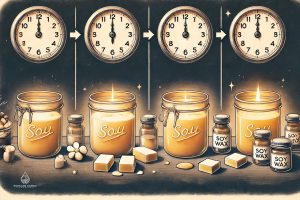
It skins over quickly. You can move the jar in a few hours. Do not judge the scent until it has cured. Continue reading
Do not microwave a candle in its jar. Metal tabs, cracked glass, and a very bad smell if the fragrance cooks. Continue reading
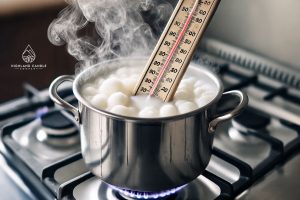
Overheat soy and you cook the scent, yellow the wax, and pour a jar that never quite throws. Continue reading
Black glass is soot. Trim the wick, move it off the draught, wipe the jar. It is not the fragrance’s fault. Continue reading
Wet spots are air between wax and glass. They look like a fault. They are not. The candle will still burn. Continue reading