
No products in the cart.
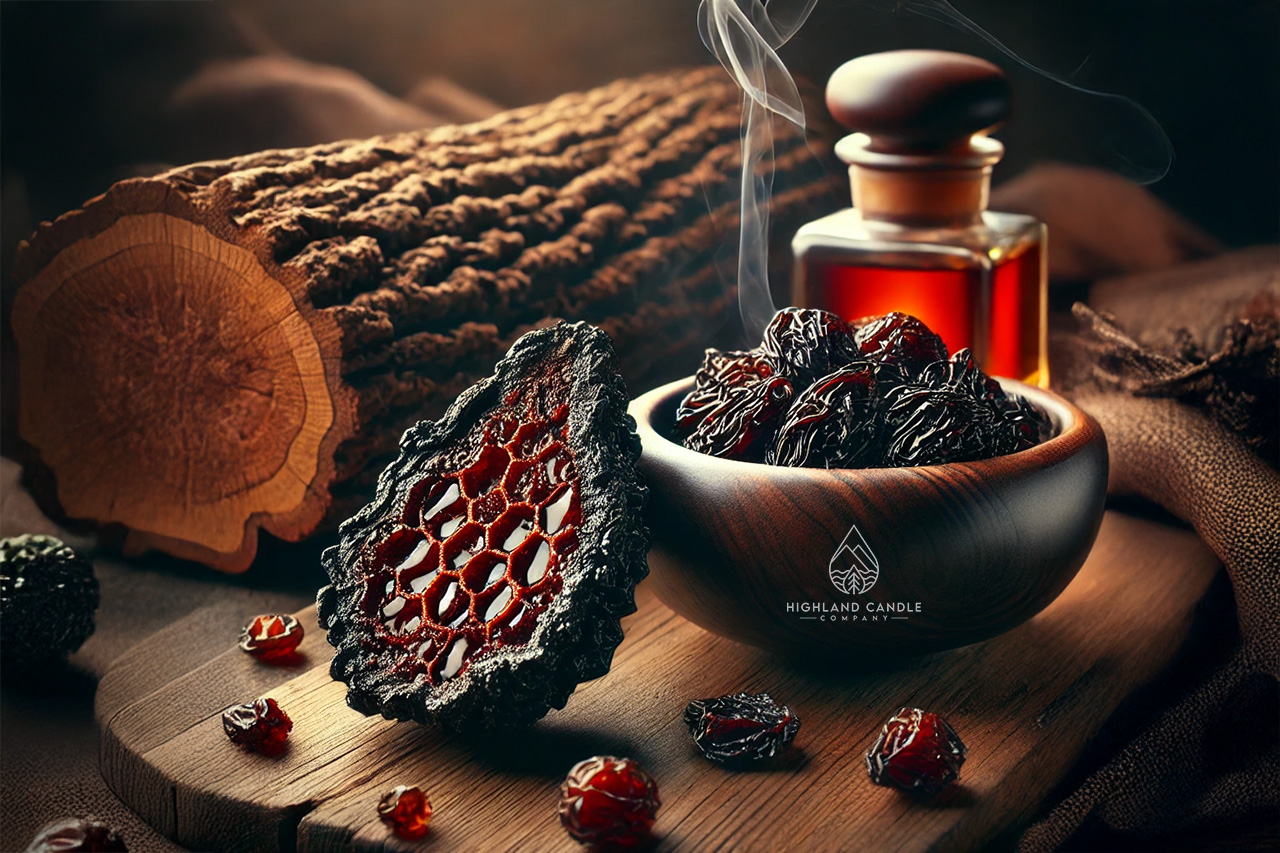
Oud (agarwood) smells of dark, damp wood with an animal edge — leather, barn, a sweet balsamic resin underneath. The Instagram version is “rich and luxurious”. The real material can be barnyard, medicinal, almost cheesy before it turns beautiful. If a candle smells only of vanilla-wood and a price tag, that is not oud. That is a woody amber with better marketing.
The actual smell
- Dark wet wood — the core. Sometimes a bit fungal, in a good way.
- Animal / leather — this is why people either love it or walk out of the room.
- Sweet balsam — the polish. Without it, oud is a stable. With only this, it is caramel wood.
Indian oud leans animal. Cambodian leans sweeter and more resinous. Almost no candle at this price contains the real oil. You are smelling an accord. Judge it on whether it still has that dirty-wood tension, not on whether the box said oud.
In a candle
Base note. It stays in the curtains. Hot throw in soy-coconut is a low hum; if it fills the house in five minutes they dosed it like a car air freshener. Cold throw is excellent because those balsamic materials sit well in wax.
Give it a long first burn. Base notes are trapped in the unused ring if you tunnel. Trim the wick or the animal note cooks into something you will regret.
In a house
Winter. Closed doors. Wool. It is too much for a small bathroom and it will fight with food. A Highland evening after rain, coats on the bannister — that is the mood, even if the tree itself never grew here.
If you want dark-wood without the perfume-counter brief, The Vikings is salted and older-feeling.
Quick answers
Oud vs sandalwood? Sandalwood is pale, creamy, polite. Oud is dark and a bit feral.
Why does cheap oud smell like bandages? A medicinal isolate, no balsam, no wood. They bought the cliché.


About author

Related posts
Peppermint is sweet mint and menthol, not toothpaste. Here is how it should smell in a room. Continue reading
Rosemary is pine-herb and camphor, not Sunday lamb. Here is how it smells in a candle. Continue reading
Frankincense is lemon-pine resin, not campfire. Here is what it smells like when you burn it in a jar. Continue reading

Ylang-ylang is banana-floral and pollen, not generic tropical. Here is the honest candle version. Continue reading
Jasmine is night flower and a bit of animal, not shampoo. Here is how it should smell in a jar. Continue reading