
No products in the cart.
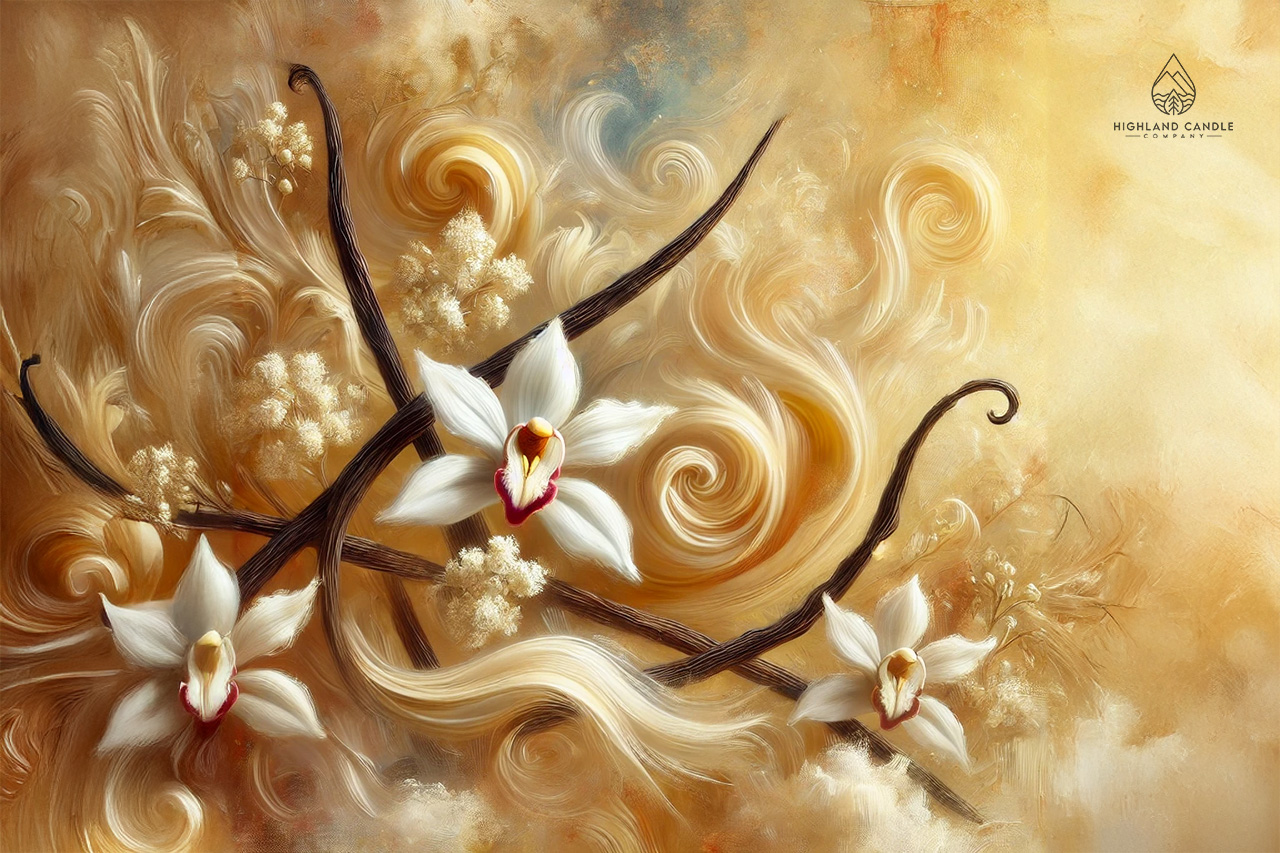
Vanilla smells warm, sweet and creamy, with a soft richness that many people associate with custard, baking and desserts. But the fragrance of a real vanilla pod is more complex than the sugary vanilla found in some candles and perfumes.
Split open a good cured vanilla pod and you may notice hints of wood, spice and even something slightly boozy beneath the familiar sweetness. It’s a deeper, less obviously sugary smell than vanilla icing or a bottle of artificial vanilla flavouring.
What does vanilla actually smell like?
The most recognisable part of vanilla’s fragrance is its warm, creamy sweetness. However, natural vanilla can have several other characteristics:
- Sweet and creamy: The familiar vanilla aroma, often compared to custard, cream or soft caramel.
- Warm and woody: A gentle dry quality that gives natural vanilla more depth than simple sugar-like sweetness.
- Softly spicy: Some vanilla extracts have subtle hints of spice, making the fragrance feel warmer and more rounded.
- Rich and slightly boozy: Certain cured pods and extracts can suggest rum, dried fruit or a little tobacco-like warmth.
Not every vanilla has all these characteristics. Some varieties are noticeably creamy and sweet, while others are more floral, woody or fruity.
That’s part of what makes natural vanilla so interesting. The familiar sweetness is only one aspect of its fragrance.
Where does the smell of vanilla come from?
Vanilla comes from the seed pods of tropical orchids belonging to the Vanilla genus. The most widely cultivated species is Vanilla planifolia.
Freshly harvested vanilla pods don’t have the same rich fragrance as the dark, cured pods we’re familiar with. Their characteristic aroma develops through a lengthy curing process involving controlled heating, sweating and drying.
One of the most important aromatic compounds is vanillin, which provides much of vanilla’s recognisable sweet, creamy smell.
But vanilla isn’t just vanillin. Researchers have identified numerous other aromatic compounds in cured pods, contributing woody, fruity, floral, spicy and sometimes smoky characteristics.
These additional compounds help explain why natural vanilla extract can smell more complex than vanillin on its own.
Why do some vanilla fragrances smell like cake or icing?
Vanilla is so closely associated with baking that fragrance makers often emphasise its sweetest characteristics.
A vanilla candle might be designed to smell like fresh vanilla pods, but it could just as easily be inspired by buttercream, warm biscuits or vanilla custard.
These dessert-like fragrances are often described as gourmand, a term used in perfumery for scents that bring to mind edible treats.
Adding notes of caramel, sugar, cream or chocolate can make vanilla feel particularly rich and sweet.
There’s nothing wrong with that interpretation. It simply isn’t the same as the fragrance of a natural vanilla pod.
If you prefer a less sugary vanilla, look for combinations that include woods, spices, resins or other notes that balance its sweetness.
Does vanilla smell like tonka bean?
Vanilla and tonka bean are often compared because both have a warm, sweet fragrance.
Vanilla is generally creamier and has a familiar soft sweetness, sometimes accompanied by woody or spicy undertones.
Tonka bean has a more pronounced almond-like quality, alongside notes reminiscent of freshly cut hay and warm tobacco. Its distinctive aroma comes largely from a compound called coumarin.
Another fragrance sometimes confused with vanilla is benzoin, an aromatic tree resin with a warm, balsamic scent that can suggest vanilla, caramel and amber.
All three can appear in the same fragrance composition, particularly in perfumes and candles designed to smell warm, rich and comforting.
What does vanilla smell like in candles?
Vanilla is popular in scented candles because of its familiar sweetness and ability to complement many other fragrances.
However, not every vanilla candle smells like a bakery.
Some focus on creamy sweetness, while others combine vanilla with deeper notes to create something less obviously edible.
Common combinations include:
- Vanilla and sandalwood: Soft, creamy sweetness with a smooth woody character.
- Vanilla and amber: A warm, resinous fragrance with a richer, more perfumed quality.
- Vanilla and tobacco: Sweetness balanced by dry, leafy and slightly smoky notes.
- Vanilla and citrus: A brighter fragrance that contrasts fresh citrus with a warm, sweet background.
A vanilla-scented candle doesn’t necessarily contain natural vanilla extract. Its aroma may be created using vanillin and other fragrance ingredients.
What matters to the final smell is how those ingredients are combined, rather than whether the fragrance is described as natural or synthetic.
Can vanilla make candle wax turn yellow?
Yes. Some fragrance oils containing vanillin can cause candle wax to develop a yellow, cream or brownish colour over time.
This happens because certain fragrance ingredients can undergo chemical changes, including oxidation, which may affect their colour.
Discolouration doesn’t automatically mean the candle has expired or become unsafe. However, its appearance alone isn’t enough to establish that everything is fine, particularly if there are other changes such as unusual oil separation.
It’s one of the reasons candle makers need to assess how a fragrance behaves in a particular formulation, rather than judging it only by how it smells.
Is vanilla a pleasant fragrance for the home?
If you enjoy warm, sweet fragrances, vanilla is an obvious choice. Its familiarity makes it appealing to many people, although some find heavily sweetened versions a little overwhelming.
Those who dislike sugary or bakery-style scents may prefer vanilla blended with dry woods, spices or resins.
And if you’ve always thought vanilla smelled simply of cake, it’s worth smelling a real cured vanilla pod. Beneath that familiar sweetness is something warmer, woodier and considerably more interesting.


About author

Related posts

Peppermint is sweet mint and menthol, not toothpaste. Here is how it should smell in a room. Continue reading

Rosemary is pine-herb and camphor, not Sunday lamb. Here is how it smells in a candle. Continue reading

Frankincense is lemon-pine resin, not campfire. Here is what it smells like when you burn it in a jar. Continue reading

Ylang-ylang is banana-floral and pollen, not generic tropical. Here is the honest candle version. Continue reading
Jasmine is night flower and a bit of animal, not shampoo. Here is how it should smell in a jar. Continue reading