
No products in the cart.

For most people, lighting a scented candle is a pleasant way to make a room feel a little more inviting. But not everyone enjoys fragrance in quite the same way. Some people notice headaches, sneezing, irritated eyes or a tickly throat when a scented candle is burning.
It’s tempting to describe any of these reactions as a candle allergy, but there’s an important distinction. Fragrance sensitivity, irritation and a genuine allergic reaction aren’t necessarily the same thing.
Understanding the difference can help explain why certain candles bother some people while others seem to have no effect at all.
Can you be allergic to scented candles?
It’s possible to be allergic to particular fragrance ingredients, although not every reaction to a scented candle involves an allergy.
A true allergy involves the immune system reacting to a substance. Fragrance ingredients are recognised causes of allergic contact dermatitis, for example, which can produce itchy or inflamed skin following contact.
However, someone who develops a headache or starts coughing around a scented candle may instead be experiencing irritation or sensitivity to fragrance or airborne pollutants.
The symptoms alone aren’t enough to establish what’s causing the reaction. If they happen repeatedly, a healthcare professional can help investigate.
Why do scented candles sometimes cause headaches or irritation?
There are several possible explanations.
Fragrance sensitivity
Some people are particularly sensitive to strong smells. Perfumes, cleaning products, air fresheners and scented candles can all cause discomfort in susceptible individuals.
A fragrance that one person barely notices might seem overwhelming to someone else.
This doesn’t automatically mean the fragrance contains something harmful or that the person has developed an allergy. Individual sensitivity varies considerably.
Smoke and airborne particles
Burning candles also produce airborne particles and other combustion emissions. These can contribute to indoor air pollution, even when a candle doesn’t produce obvious black smoke.
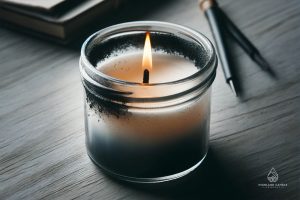
A candle with an excessively long wick or an unstable flame may produce more soot than intended. Keeping the wick properly maintained and avoiding draughts can help reduce unnecessary smoking, although it doesn’t eliminate all emissions.
We’ve covered the causes in our article on why candle jars turn black.
Can scented candles trigger asthma?
Yes. Fragrance and combustion-related pollutants can trigger symptoms in some people living with asthma or other respiratory conditions.
These symptoms may include coughing, wheezing, chest tightness or breathlessness.
Not everyone with asthma responds to the same triggers. Some people tolerate scented products without difficulty, while others find even relatively mild fragrances uncomfortable.
If candles repeatedly trigger asthma symptoms, avoiding them is more sensible than trying to find a fragrance that might be tolerable.
Asthma + Lung UK provides further information about asthma triggers and how to manage them.
Are natural candles better for people with allergies?
Not necessarily. It’s a common misconception that natural ingredients are automatically less likely to cause reactions.
Essential oils, for example, come from plants but can still contain substances capable of causing irritation or allergic reactions.
Similarly, choosing a particular candle wax doesn’t guarantee that the finished candle will be suitable for someone with fragrance sensitivity or asthma.
The ingredients, fragrance formulation and burning conditions all matter. Even unscented candles produce emissions when burned.
Labels such as natural, vegan or plant-based shouldn’t be interpreted as guarantees that a candle is hypoallergenic.
What should you do if a candle causes symptoms?
If you develop symptoms while a candle is burning, extinguish it safely and move away from the source. Allow fresh air into the room where practical.
Don’t deliberately expose yourself to the candle again to see whether the same reaction occurs.
If symptoms persist or keep returning, speak to your GP. Anyone with asthma should follow their prescribed asthma action plan if symptoms develop.
Severe breathing difficulties, swelling of the throat or other signs of a serious allergic reaction require emergency medical attention. Call 999.
Can you still enjoy candles if you’re sensitive to fragrance?
That depends on what causes your symptoms and how strongly you react.
Some people find particular fragrances uncomfortable, while others are affected by scented products more generally. If a candle repeatedly causes symptoms, avoiding it is the safest approach.
If you enjoy the appearance of candlelight rather than the fragrance itself, flameless LED candles are another option. They provide a similar atmosphere without a burning wick or fragrance being released into the room.
For a broader discussion of indoor air quality and candles, read our article on the health impacts of scented candles.
Scent is a personal experience, and there’s no single candle that suits everyone. The important thing is to pay attention to how you feel around fragranced products rather than assuming that a candle must be harmless simply because its ingredients are described as natural.


About author

Related posts
Black glass is soot. Trim the wick, move it off the draught, wipe the jar. It is not the fragrance’s fault. Continue reading

Wet spots are air between wax and glass. They look like a fault. They are not. The candle will still burn. Continue reading

Candles do not expire like milk. They fade, they dust, they bloom. Most of them are still fine to burn. Continue reading

Cold throw is the lid sniff. Hot throw is the room. They are not the same, and soy is often quieter on the lid. Continue reading

Usually yes, better in the hold. Wrap them, lid on, and check the airline because staff can still say no. Continue reading