
No products in the cart.

At the foot of the Black Cuillin mountains on the Isle of Skye, a series of waterfalls tumbles through rocky pools of remarkably clear water. These are the Fairy Pools, one of the island’s most visited natural attractions.
On a bright day, the water can appear almost turquoise, with the dark mountains of Glen Brittle rising behind it. The setting is beautiful, although you’ll rarely have it entirely to yourself during the summer months.
Fortunately, the Fairy Pools are relatively easy to reach, and the walk through the glen is almost as enjoyable as the pools themselves.
Where are the Fairy Pools?
The Fairy Pools are in Glen Brittle, on the western side of the Isle of Skye, beneath the dramatic peaks of the Black Cuillin.
The water flows down a mountain stream called the Allt Coir’ a’ Mhadaidh, forming a succession of small waterfalls, rocky channels and clear pools before eventually joining the River Brittle.
Some of the pools are deep enough to swim in, while others are little more than shallow basins where the water collects between rocks. The colour changes with the light, from clear green to vivid blue, particularly when the sun reaches the water.
And behind it all are the Cuillin, a mountain range that looks quite unlike anywhere else in Scotland.
Walking to the Fairy Pools
The walk begins at the dedicated Fairy Pools car park in Glen Brittle. From there, a well-established path descends towards the stream before continuing upstream beside the waterfalls.
The walk to the first main waterfall and pools is approximately 2.4 kilometres there and back. Most visitors can comfortably allow between 45 minutes and an hour and a half, depending on how frequently they stop.
There are now footbridges across the streams along the main approach, making access easier than it once was. The path is generally well surfaced, although some sections are rocky, steep or uneven, particularly further upstream.
You don’t have to reach a particular point to appreciate the place. There are attractive pools and waterfalls along the way, and the views towards the mountains improve as you walk further into the glen.
If you enjoy longer walks, the route can be extended towards Coire na Creiche, taking you further into the Cuillin landscape. For a detailed description, see the Fairy Pools walking route on Walkhighlands.
Can you swim in the Fairy Pools?
Some visitors do, although the water is exceptionally cold, even in summer.
These are mountain pools fed by rainwater and streams coming down from the Cuillin. They aren’t heated by the summer sunshine in the way you might expect from their bright blue appearance.
Cold water can cause an involuntary gasp and rapid breathing, even in otherwise confident swimmers. The rocks can also be extremely slippery, with sudden changes in depth and strong currents around the waterfalls.
If you’re considering entering the water, make sure you understand the risks of cold-water swimming and the conditions on the day. Avoid jumping or diving into unfamiliar pools, and never enter water that is fast-flowing or swollen after heavy rain.
There’s no need to swim to enjoy the Fairy Pools. They’re every bit as impressive from the banks.
Why are they called the Fairy Pools?
Skye has a long tradition of stories involving fairies and other supernatural beings, so the name seems entirely at home on the island.
Interestingly, however, the name Fairy Pools appears to have become widely used relatively recently. Local Gaelic heritage researcher Coinneach Maclean has questioned many of the modern stories associated with the site, pointing out that older accounts of the area focus on quite different events.
One of those is the Battle of Coire na Creiche in 1601, fought between the MacDonalds and MacLeods during a period of violent clan rivalry. The surrounding glen has a history considerably older than its modern popularity as a tourist attraction.
Whether or not fairies had anything to do with the original naming, the pools certainly have an unusual appearance. You can understand why someone looking at that clear water beneath the Cuillin might have thought the name suited them.
Parking and visiting the Fairy Pools
The Fairy Pools car park is reached along the Glen Brittle road, which branches off near Carbost. Much of the approach is single-track, with passing places, so allow extra time when travelling during the busy season.
There’s a purpose-built car park with toilets, managed by the Outdoor Access Trust for Scotland. Parking charges apply, but there is no separate admission fee for walking to the pools.
The car park was developed partly to address the problems caused by visitors parking along the narrow road. If it’s full, don’t leave your vehicle in a passing place or somewhere that obstructs access for residents and emergency services.
You can check current parking information on the Outdoor Access Trust for Scotland website.
When is the best time to visit?
Summer brings longer days and, with luck, enough sunshine to show the pools at their most colourful. It also brings the greatest number of visitors.
Arriving early in the morning or later in the afternoon can make for a quieter experience, although the Fairy Pools are popular enough that even these times aren’t guaranteed to be peaceful.
Spring and autumn are worth considering too. The surrounding hills change colour with the seasons, and the waterfalls can be particularly impressive after rain.
Just remember that more rain means stronger currents and slippery rocks. Wear shoes with a decent grip, bring waterproof clothing and be prepared for the weather to change during your visit.
And as with many places on Skye, summer evenings can bring midges, especially when the air is still.
A place worth taking your time over
The Fairy Pools have become enormously popular, and there’s no pretending they’re a hidden Highland secret. On a busy day, you may find yourself sharing the path with a steady stream of visitors and photographers.
But the popularity doesn’t take away from the landscape itself. The water really is remarkably clear, the waterfalls are lovely, and the dark, jagged outline of the Cuillin provides a backdrop that photographs rarely capture fully.
If you’re exploring more of the island, our guide to the Isle of Skye covers other places worth visiting.
Give yourself enough time to wander beyond the first waterfall, stop occasionally and look up at the mountains. There’s rather more to Glen Brittle than getting a photograph of turquoise water.


About author

Related posts
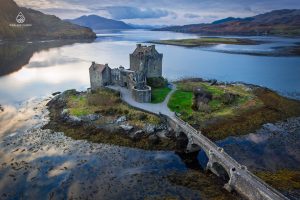
Eilean Donan is a rebuilt castle on a tidal island at Dornie, where three lochs meet. Famous, photogenic, still worth the stop if you pick... Continue reading
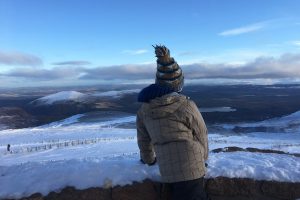
Cairn Gorm is the named summit above Aviemore. The plateau is the real mountain. The car park is only the start. Continue reading
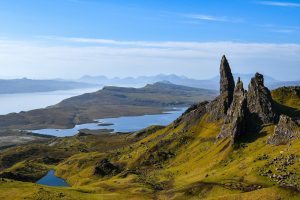
Skye is not named after the sky. The old names point at Norse and Gaelic. The English spelling is the latecomer. Continue reading
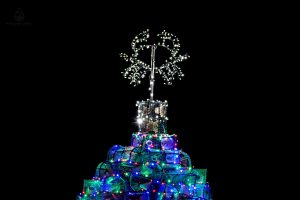
The creel tree is Ullapool’s Christmas: stacked fishing pots on the waterfront, lights, and not a plastic fir in sight. Continue reading
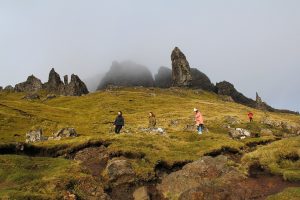
The Storr is the rock pillar on Skye’s Trotternish ridge. Steep, popular, worth it in the first hour of the day. Continue reading