
No products in the cart.
There are few places in Scotland quite like the Isle of Skye. Mountains rise sharply from the sea, narrow roads wind between scattered crofts, and great cliffs look out towards the islands of the Outer Hebrides.
It’s a landscape that has drawn visitors for generations, although these days you’re unlikely to have its most famous viewpoints entirely to yourself.
Skye is also much larger than people sometimes expect. You can spend an entire day exploring one peninsula and still miss places worth stopping for. The best way to enjoy the island is to allow enough time to appreciate its different landscapes rather than racing between the photographs you’ve seen online.
Where is the Isle of Skye?
The Isle of Skye lies off Scotland’s north-west coast and is the largest island in the Inner Hebrides.
It’s connected to the mainland by the Skye Bridge, which crosses Loch Alsh between Kyle of Lochalsh and Kyleakin. You can also reach the island by ferry from Mallaig to Armadale, on the southern Sleat peninsula.
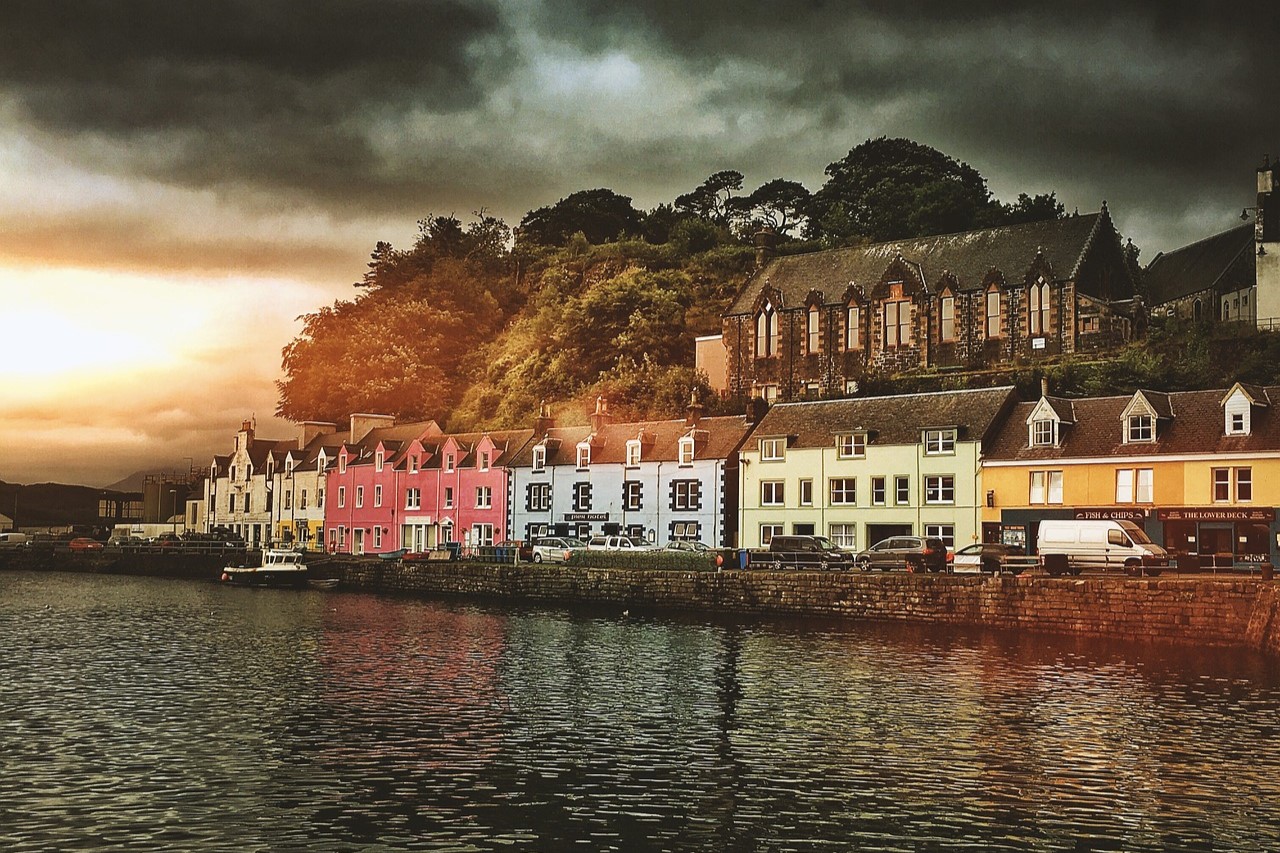
Portree is Skye’s largest town and a convenient base for exploring, with shops, restaurants, accommodation and a colourful harbour overlooking the sheltered bay.
But Skye isn’t really somewhere you come for its towns. It’s the landscape between them that makes the journey memorable.
The best places to visit on the Isle of Skye
There’s no shortage of things to see, but it helps to understand where everything is. Skye’s main attractions are spread across several peninsulas, and driving between them can take considerably longer than the distances suggest.
The Old Man of Storr
North of Portree, the Old Man of Storr rises from a remarkable landscape of rocky pinnacles and steep green slopes.
The famous rock formation is part of an ancient landslip on the Trotternish peninsula. A popular walking route climbs towards the pinnacles, with impressive views across the Sound of Raasay.
It’s one of Skye’s best-known sights, and for good reason. Even from the roadside below, the scale of the rock formations is striking.
The walk involves a substantial uphill climb, so it’s worth wearing suitable footwear and allowing plenty of time. Read more in our guide to the Old Man of Storr.
The Quiraing
Continue north along Trotternish and you’ll reach the Quiraing, another extraordinary landscape shaped by ancient landslides.
Here, cliffs and pinnacles rise above sweeping green slopes, with strange rock formations and hidden plateaux scattered across the hillside.
The road over the Quiraing offers some remarkable views, particularly when clouds move across the mountains and sunlight catches the slopes below.
There’s also a popular walking circuit, although the full route includes steep, uneven ground and exposed sections. If you’d rather not tackle the walk, you can still appreciate much of the scenery from around the designated parking area.
The Fairy Pools
On the western side of the island, beneath the Black Cuillin, the Fairy Pools are a series of clear pools and small waterfalls formed by a mountain stream flowing through Glen Brittle.
On a sunny day, the water can appear almost turquoise against the surrounding rock. It’s easy to see why the pools have become such a popular destination.
There’s a well-established walking route from the dedicated car park, although the ground can be rough and wet in places.
Some visitors swim in the pools, but the mountain water is extremely cold and conditions can change quickly after rain. There’s plenty to enjoy without getting into the water.
Our Fairy Pools visitor guide covers the walk, parking and what to expect.
Neist Point Lighthouse
At the western edge of Skye, Neist Point Lighthouse stands on a narrow headland surrounded by high cliffs and open sea.
The lighthouse was first illuminated in 1909, and its position overlooking the waters towards the Outer Hebrides is spectacular.
Visitors can follow a steep path down towards the headland, although the return climb is demanding. The familiar photographs showing the lighthouse beyond the cliffs are generally taken from higher ground near the parking area.
Neist Point is particularly popular at sunset, when the evening light reaches across the sea. The approach road is narrow, and strong winds and exposed cliff edges deserve proper care.
We’ve covered the walk and its history in our Neist Point Lighthouse guide.
Dunvegan Castle and the north-west coast
Not everything worth visiting on Skye involves climbing a hill.
Dunvegan Castle has been associated with Clan MacLeod for more than 800 years and remains one of the island’s most important historic sites.
The castle and its gardens make an interesting change from the mountain scenery, particularly if the weather isn’t suitable for a long walk.
Nearby, Coral Beach is another popular destination. Despite its name, the pale shore is largely formed from crushed, calcified seaweed rather than tropical coral.
The surrounding peninsulas of Waternish and Duirinish are also worth exploring for their coastal scenery, small settlements and galleries.
The Cuillin mountains
The Cuillin dominate much of southern and central Skye, creating a jagged skyline unlike any other mountain range in Britain.
The Black Cuillin are particularly dramatic, with steep ridges, rocky summits and challenging scrambling routes. They’re a major destination for experienced mountaineers.
These mountains demand respect. Many routes require scrambling skills, confident navigation and, in some cases, climbing equipment and technical experience. They’re not suitable for an inexperienced walker simply following a phone map.
Fortunately, you don’t need to climb the Cuillin to appreciate them.
The views from Sligachan, Glen Brittle and Elgol are outstanding. On a clear day, the mountains rise in a great sweep of dark rock above the surrounding glens and sea lochs.
For anyone planning a mountain route, Mountaineering Scotland provides useful information about scrambling skills and preparation.
Portree and Skye’s quieter places
Portree is the island’s main centre, with a colourful row of harbourside buildings, fishing boats and a good selection of independent shops and places to eat.
It’s a useful place to stay if you want to explore several different parts of the island, although accommodation can be expensive and difficult to find at short notice during summer.
Broadford, further south, is another practical base, particularly if you’re arriving over the Skye Bridge or travelling towards Sleat.
Beyond the main visitor routes, there’s plenty to discover. The Sleat peninsula has sheltered woodland and gentler coastal scenery, while Elgol offers remarkable views across the water towards the Cuillin.
In the north, Staffin and Uig have their own distinct character, surrounded by crofting land, sea cliffs and the dramatic geology of Trotternish.
Skye is a living island, with working farms, fishing boats, schools and communities. Some of its most interesting moments come from spending time in these places rather than simply travelling between major attractions.
How many days do you need on the Isle of Skye?
You can certainly visit Skye in a day, particularly if you’re already staying nearby. But trying to see the entire island in that time is likely to mean spending more time in the car than enjoying the places you’ve come to visit.
As a general guide:
- One day: Choose one area, such as Portree and Trotternish, rather than attempting to visit every major attraction.
- Two days: Spend one day exploring the north of the island and another around Glen Brittle or the western peninsulas.
- Three or four days: A much more comfortable visit, allowing time for walks, villages, coastal scenery and changes in the weather.
- A week: Plenty of opportunity to explore more slowly, include quieter areas and enjoy longer walks or boat trips.
These aren’t rigid itineraries. If you enjoy walking, photography or simply taking your time, you could spend far longer on Skye without running out of places to discover.
Getting to and around Skye
The most common way to reach Skye is by road via the Skye Bridge at Kyle of Lochalsh. The bridge is toll-free, and the A87 continues north through the island towards Portree and Uig.
Another option is the CalMac ferry between Mallaig and Armadale. This can be a particularly scenic approach if you’re travelling through Lochaber on the mainland.
Uig also has ferry connections to Tarbert on Harris and Lochmaddy on North Uist, making Skye an important gateway to the Outer Hebrides.
Check sailing schedules and make any necessary reservations through CalMac before travelling.
Once on the island, a car offers the greatest flexibility, although buses and organised tours are also available.
Many smaller roads are single-track with passing places. Drive at an appropriate speed, be prepared to reverse to a passing place when necessary and never use one as a parking space. If traffic builds up behind you, let it pass when safe.
Skye’s local visitor information website, Skye.scot, has practical advice about driving, journey times and planning your stay.
When is the best time to visit Skye?
Every season offers something different, although the weather can be unpredictable throughout the year.
Spring brings longer daylight hours and the first signs of colour returning to the hills. It’s a good time to visit before the busiest summer period.
Summer offers long evenings and generally more opportunities for outdoor activities. It’s also the busiest season, with popular car parks and accommodation under considerable pressure. Midges can be troublesome in sheltered places when the air is still.
Autumn can be particularly beautiful, with changing colours across the hills and fewer visitors at some of the best-known locations. The weather becomes less predictable, however, and daylight hours shorten.
Winter reveals a quieter side of the island, but short days, severe weather and limited seasonal opening hours require more planning. Mountain walking can involve serious winter conditions.
For many visitors, May, June or September offer a reasonable balance between daylight, access and the busiest summer crowds, though there’s never a guarantee of good weather.
A little of Skye’s history and culture
Skye’s landscape is only part of its identity.
The island has a rich Gaelic heritage, a long history of crofting and fishing, and strong connections with Clan MacLeod and Clan Donald.
Its history also includes the Highland Clearances, when people were displaced from communities across Skye during the eighteenth and nineteenth centuries. Emigration left lasting marks on the island and on families who settled far beyond Scotland.
Gaelic remains an important part of Skye’s cultural life, alongside traditional music, storytelling, art and contemporary island businesses.
Even the island’s name has an interesting history, with several competing explanations for its origins. We’ve explored those in our article on why Skye is called Skye.
What to see on the way to Skye
If you’re arriving from Inverness or travelling west along the A87, one of Scotland’s most recognisable castles lies just before the Skye Bridge.
Eilean Donan Castle stands on a small tidal island near Dornie, surrounded by the waters of three sea lochs.
It’s an easy place to include on a journey towards Skye, provided you’ve allowed time to stop rather than treating the whole drive as a race to Portree.
Is the Isle of Skye worth visiting?
Without question. Skye has some of the most extraordinary scenery in Scotland, from the dark summits of the Cuillin to the cliffs of Trotternish and the sea views around Neist Point.
But its popularity means planning matters. The famous places can be busy, the roads are often slow, and the weather doesn’t always cooperate with a carefully arranged itinerary.
Give yourself time to explore one area properly. Stop in the villages, look beyond the best-known viewpoints and leave room for the occasional change of plan.
The photographs may be what persuade you to visit Skye. The island itself is considerably more interesting than a collection of photographs.
About author

Related posts
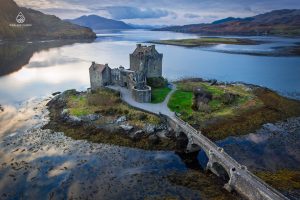
Eilean Donan is a rebuilt castle on a tidal island at Dornie, where three lochs meet. Famous, photogenic, still worth the stop if you pick... Continue reading
Cairn Gorm is the named summit above Aviemore. The plateau is the real mountain. The car park is only the start. Continue reading
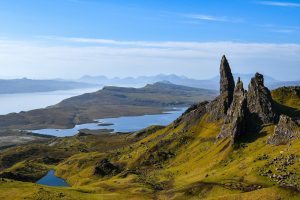
Skye is not named after the sky. The old names point at Norse and Gaelic. The English spelling is the latecomer. Continue reading
The creel tree is Ullapool’s Christmas: stacked fishing pots on the waterfront, lights, and not a plastic fir in sight. Continue reading
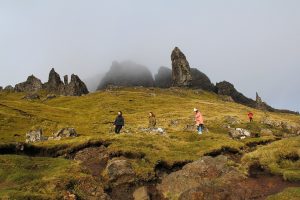
The Storr is the rock pillar on Skye’s Trotternish ridge. Steep, popular, worth it in the first hour of the day. Continue reading