
No products in the cart.

With its mountains frequently disappearing into the clouds, you could be forgiven for thinking the Isle of Skye was named after the sky above it. It’s a lovely explanation, but the real story is considerably older and rather more complicated.
In fact, nobody knows for certain where the name Skye originally came from. Historians and linguists have spent centuries trying to work it out, with several theories surviving to this day.
Does Skye mean the Island of Clouds?
One of the best-known explanations connects Skye to the Old Norse language and a name interpreted as the “Cloud Island” or “Misty Isle”. Considering how often the Cuillin mountains disappear behind a blanket of cloud, it certainly seems appropriate.
The Vikings had a considerable influence on the Hebrides, and Norse names can still be found across Skye and the surrounding islands.
There’s a problem with this explanation, however. The island’s name appears in records from well before the Viking Age.
The Greek geographer Ptolemy recorded a name resembling Skye in the second century AD. Later forms include the Latin Scitis and Old Norse Skíð. These early references suggest that the island’s name has a much longer history than its Norse connections alone can explain.
Why is Skye called the Winged Isle?
Another popular explanation comes from the island’s unusual shape.
Look at Skye on a map and you’ll notice that it isn’t a neat, rounded island. Long peninsulas stretch out in different directions, separated by sea lochs that cut deep into the land.
This has given rise to the name “Winged Isle”, associated with the Gaelic word sgiath, meaning wing.
The interpretation goes back at least to the sixteenth century, when descriptions of the island compared its projecting headlands to wings. It’s an appealing idea, although linguists generally regard it as a traditional interpretation rather than a confirmed explanation of the original name.
What is the Gaelic name for Skye?
In Scottish Gaelic, Skye is known as An t-Eilean Sgitheanach, meaning the Isle of Skye.
It also has a beautiful poetic name: Eilean a’ Cheò, the Isle of Mist.
That second name is particularly fitting. Anyone who has watched cloud rolling across the Cuillin or hanging over the hills around Portree will understand why it has endured.
But while the island’s misty reputation is well deserved, it doesn’t establish where the original name came from.
So where did the name Skye really come from?
For now, the answer remains uncertain. The name has passed through different languages over many centuries, and its earliest meaning may never be established conclusively.
Perhaps that’s part of what makes it interesting. An island famous for its dramatic scenery and ancient history still has a name whose beginnings we can’t quite explain.
And if the name has made you curious about the place itself, our guide to the Isle of Skye explores more of the island, its landscape and its history.


About author

Related posts
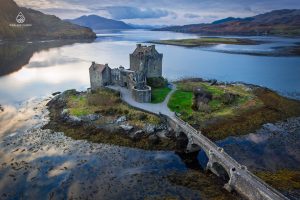
Eilean Donan is a rebuilt castle on a tidal island at Dornie, where three lochs meet. Famous, photogenic, still worth the stop if you pick... Continue reading

Cairn Gorm is the named summit above Aviemore. The plateau is the real mountain. The car park is only the start. Continue reading
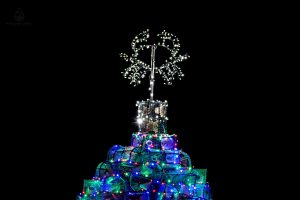
The creel tree is Ullapool’s Christmas: stacked fishing pots on the waterfront, lights, and not a plastic fir in sight. Continue reading
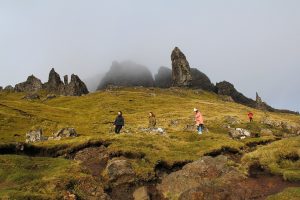
The Storr is the rock pillar on Skye’s Trotternish ridge. Steep, popular, worth it in the first hour of the day. Continue reading
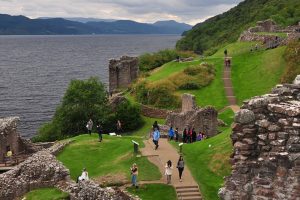
Urquhart is the ruin on the spit of Loch Ness. Worth it before the buses. The loch is the backdrop, not a monster enclosure. Continue reading