
No products in the cart.

You’ve poured a fresh batch of candles, the wax has hardened and they look ready to light. But before you reach for the matches, there’s one more thing to consider: curing.
Most scented candles benefit from a resting period after pouring, which can range from a couple of days to around two weeks. The right amount of time depends on the wax, fragrance and overall formulation.
It’s one of the less exciting parts of candle making, particularly when you’re keen to test a new fragrance. But giving a candle sufficient time to settle can make a noticeable difference to its performance.
What does curing a candle actually mean?
Curing is the period after a candle has been poured and cooled, during which it’s left undisturbed before testing or burning.
When melted wax cools, it changes from liquid to solid. With many waxes, particularly those containing vegetable oils, the internal structure continues developing after the surface has hardened.
Fragrance performance can change during this resting period too. Candle makers sometimes find that a fragrance which seems fairly subtle after a couple of days becomes more noticeable after a week or two.
Exactly why this happens isn’t completely understood. Changes in the wax structure and how fragrance is distributed or released may play a part, but there’s no evidence that fragrance needs two weeks to chemically bind to the wax.
The important distinction is that a candle looking solid doesn’t necessarily mean its fragrance performance has reached its final state.
How long should different candle waxes cure?
There’s no universal curing time, and the recommendations you’ll find online can vary considerably.
However, there are some useful general guidelines:
- Soy wax: Many candle makers allow 7–14 days before making a final assessment of fragrance throw. Some specific soy wax formulations have much shorter manufacturer-recommended curing periods.
- Paraffin wax: Several days is often sufficient, with 3–5 days being a commonly recommended starting point. However, individual paraffin formulations and blends may require longer.
- Coconut and other vegetable wax blends: Recommendations vary widely. Some are suitable for testing after approximately 48 hours, while others may benefit from one or two weeks of resting before fragrance evaluation.
- Beeswax: Allow it to cool and harden fully, then follow the supplier’s guidance for the particular formulation. Scented beeswax blends may need additional resting time before fragrance testing.
These are guidelines, not fixed rules. Two waxes with similar names can contain different ingredients and behave quite differently.
If you’re making candles, always check the technical information supplied with your wax. That’s a more reliable starting point than assuming every soy candle needs fourteen days or every paraffin candle is ready after twenty-four hours.
Does curing improve candle fragrance?
It can, particularly when it comes to fragrance throw.
Cold throw describes how strongly a candle smells when it’s unlit, while hot throw is the fragrance released when the candle is burning.
Both can change during curing, although the improvement isn’t guaranteed.
Some fragrance and wax combinations perform well after a relatively short resting period. Others need longer before their scent becomes more noticeable or balanced.
That’s why it’s worth waiting for the recommended curing period before deciding that a new candle formulation has poor fragrance performance.
We’ve covered the difference between the two types of fragrance performance in our guide to hot and cold candle throw.
How should you store candles while they’re curing?
Fortunately, curing doesn’t require any specialist equipment. A stable, dry room at a moderate temperature is generally suitable.
Keep freshly poured candles on a level surface, away from direct sunlight, radiators and sudden temperature changes.
Allow the wax to cool and solidify completely before fitting lids or packaging the candles. Once cooled, keeping them covered can help protect the surface from dust and debris.
There’s no need to put candles in the fridge or freezer to speed things up. Rapid cooling can affect the appearance of some waxes, and making a candle solidify faster isn’t the same as allowing it to cure properly.
How can you tell when a candle has finished curing?
Unfortunately, there’s no simple visual test. A smooth, solid surface doesn’t tell you whether a candle’s fragrance performance will improve with more time.
For anyone experimenting with candle making, the best approach is to compare identical test candles after different resting periods.
For example, you could make three candles using exactly the same ingredients, then assess them after two, seven and fourteen days, provided those intervals are appropriate for your chosen wax.
Keep the testing conditions as consistent as possible, including the room, burn duration and wick maintenance. Record what you notice about the fragrance and burning behaviour.
If there’s little difference between the later tests, you may have found a suitable curing period for that formulation.
For repeatable results, write the pouring date on each test candle. It’s a small habit that becomes particularly useful when you’re experimenting with several fragrances at once.
Can you cure a candle for too long?
Leaving a finished candle to rest beyond its recommended curing period doesn’t automatically damage it.
However, candles don’t improve indefinitely. Over time, fragrance can gradually fade or change, particularly if they’re stored somewhere warm or exposed to sunlight.
Once a candle has reached a suitable resting period, there’s generally little benefit in leaving it untouched for months in the hope of developing a stronger scent.
And if a candle still has poor fragrance throw after adequate curing, the problem may lie elsewhere. An unsuitable wick, incompatible fragrance or poorly balanced formulation won’t necessarily be corrected by waiting longer.
What happens if you light a candle before it’s cured?
In many cases, it’ll still light and burn. The main concern is that its fragrance performance may not be representative of the finished candle.
Burning too soon doesn’t automatically ruin a candle, but it can give misleading results when you’re testing a new formulation.
We’ve explored this separately in what happens if you don’t cure a candle.
For candle makers, the sensible approach is simple: follow the wax supplier’s guidance, allow an appropriate resting period and test the finished candle properly.
There’s no magic number of days that works for every candle. Sometimes a couple will do. Sometimes a fortnight is worth the wait. The important thing is understanding what works for the particular candle you’re making.


About author

Related posts
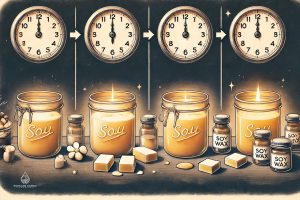
It skins over quickly. You can move the jar in a few hours. Do not judge the scent until it has cured. Continue reading
Do not microwave a candle in its jar. Metal tabs, cracked glass, and a very bad smell if the fragrance cooks. Continue reading
Overheat soy and you cook the scent, yellow the wax, and pour a jar that never quite throws. Continue reading
Black glass is soot. Trim the wick, move it off the draught, wipe the jar. It is not the fragrance’s fault. Continue reading
Wet spots are air between wax and glass. They look like a fault. They are not. The candle will still burn. Continue reading