
No products in the cart.

Loch Ness stretches for 23 miles through the Great Glen, with dark water, wooded hillsides and mountains disappearing into the distance. It’s one of Scotland’s most famous landmarks, known around the world for a creature that may or may not exist beneath its surface.
But the Loch Ness Monster is only part of the story.
The loch itself is extraordinary. It’s deeper than many people realise, holds an astonishing volume of freshwater and occupies a landscape shaped by ancient geological forces and successive ice ages.
Along its shores are ruined castles, quiet villages, waterfalls, woodland walks and places where you can stand beside the water without a souvenir shop in sight.
Where is Loch Ness?
Loch Ness lies southwest of Inverness in the Scottish Highlands, stretching along the Great Glen towards Fort Augustus.
It’s approximately 37 kilometres (23 miles) long and forms part of the waterway used by the Caledonian Canal, which connects Scotland’s east and west coasts.
The loch is bordered by steep hills, with the A82 following its north-western shore through Drumnadrochit towards Fort Augustus. On the opposite side, smaller roads pass through villages such as Dores, Inverfarigaig and Foyers.
Although it’s possible to drive around Loch Ness in a day, there’s plenty to justify spending much longer exploring the area.
How deep is Loch Ness?
At its deepest point, Loch Ness reaches approximately 230 metres (754 feet), making it the second-deepest loch in Scotland after Loch Morar.
It isn’t Scotland’s largest loch by surface area. That distinction belongs to Loch Lomond. But because Loch Ness is so long, narrow and deep, it contains more freshwater than any other loch in the country.
In fact, the volume of water is greater than that of all the lakes in England and Wales combined.
The water often appears almost black, particularly on overcast days. Much of this colour comes from organic material washed down from the surrounding peat-rich landscape.
That dark appearance, combined with the loch’s depth, has undoubtedly helped give Loch Ness its mysterious reputation.
How was Loch Ness formed?
Loch Ness occupies part of the Great Glen, a remarkable geological feature that runs diagonally across the Highlands from the Inverness area towards Fort William.
The glen follows the Great Glen Fault, an ancient fracture in the Earth’s crust associated with movements that began hundreds of millions of years ago.
During the ice ages, enormous glaciers occupied the glen. Moving ice eroded and deepened the landscape, helping create the long, steep-sided basin that now holds Loch Ness.
When the glaciers retreated, water filled the depression.
The result is a loch with relatively steep sides and extraordinary depth. Standing beside it today, it’s difficult to appreciate just how far the bed of the loch lies beneath the surface.
The legend of the Loch Ness Monster
It’s almost impossible to write about Loch Ness without mentioning Nessie.
Stories involving mysterious creatures in Scottish waters have existed for centuries. One frequently cited account appears in a seventh-century biography of Saint Columba, which describes the saint confronting a dangerous water beast in the River Ness.
That story took place in the river rather than the loch itself, and it doesn’t establish the existence of the creature we now call Nessie.
The modern Loch Ness Monster phenomenon really began in 1933, when reports of a strange animal in the water attracted considerable newspaper attention.
Further sightings followed, along with photographs, eyewitness accounts and attempts to investigate what might be living beneath the surface.
Perhaps the most famous image appeared in 1934. Known as the ‘surgeon’s photograph’, it seemed to show a long-necked creature emerging from the water.
Decades later, the photograph was exposed as a hoax involving a small model.
Since then, sonar surveys, underwater investigations and scientific research have searched for evidence of an unknown large animal living in the loch. None has produced convincing evidence of a surviving prehistoric monster.
Still, Nessie remains an important part of the area’s identity. The mystery has inspired generations of visitors, books, documentaries and a remarkable collection of stories.
You don’t have to believe in the monster to find the history of the search fascinating.
Things to see and do around Loch Ness
There’s much more to explore than the loch itself. Some places are well-known visitor attractions, while others offer a quieter experience away from the busiest stretches of road.
Urquhart Castle
One of the most famous sights on Loch Ness is Urquhart Castle, whose ruined towers stand on a rocky headland overlooking the water.
The castle played an important role during the Wars of Scottish Independence and later endured repeated raids and conflict in the Highlands.
Today, visitors can explore the medieval ruins, climb the surviving Grant Tower when access permits and enjoy views along the loch.
It’s one of the best places to appreciate the scale of Loch Ness, although it can become particularly busy during the summer.
We’ve covered its history and what to expect in our guide to Urquhart Castle.
The site is managed by Historic Environment Scotland, which recommends advance booking for admission and parking.
Drumnadrochit
A short distance north of Urquhart Castle lies Drumnadrochit, one of the main villages associated with Loch Ness tourism.
Here you’ll find cafés, accommodation, local shops and exhibitions exploring the history of the Loch Ness Monster.
The village is also a useful starting point for woodland walks and exploring Glen Urquhart.
If you’re particularly interested in Nessie, the Loch Ness Experience examines the history of reported sightings, investigations and theories surrounding the creature.
Fort Augustus and the Caledonian Canal
At the southern end of Loch Ness, Fort Augustus is a pleasant village where the Caledonian Canal meets the loch.
One of its main attractions is the flight of canal locks, where boats are raised or lowered as they travel between different water levels.
Watching a vessel make its way through the locks is an interesting way to spend an afternoon, particularly when the canal is busy.
There are also places to eat, short walks and views looking northeast along Loch Ness.
Fort Augustus makes a good stopping point if you’re travelling between Inverness and Fort William, although it’s worth allowing time to explore rather than simply driving through.
Dores Beach
For a different view of Loch Ness, head to Dores on the eastern shore.
The village has a long stretch of shingle beach, with impressive views southwest along the water towards the distant hills.
It’s a particularly good place to appreciate the loch without the surrounding buildings and visitor attractions found elsewhere.
On a clear evening, the light across the water can be lovely. Even when the weather is grey, there’s something memorable about standing on the shore and looking along such an enormous stretch of water.
The Falls of Foyers
Further along the eastern side of Loch Ness, the village of Foyers is home to an impressive waterfall set within a wooded gorge.
The Falls of Foyers plunge approximately 43 metres (140 feet), and can be particularly spectacular after heavy rain.
A stepped woodland path leads to viewpoints overlooking the waterfall. The descent is relatively short, but the steps can be steep and slippery, especially in wet conditions.
The surrounding woodland makes this an attractive stop even when you aren’t particularly interested in waterfalls.
For route information, see the Falls of Foyers walking guide.
Taking a boat trip on Loch Ness
One of the best ways to experience Loch Ness is to get out onto the water.
From the shore, it’s difficult to appreciate the full scale of the loch. Once you’re on a boat, with the wooded hills rising on either side, its length and depth begin to make more sense.
Several operators offer cruises, with departure points around the loch. Some focus on the scenery and local history, while others incorporate stories about the monster or views of Urquhart Castle.
Cruise availability depends on the season and weather, so it’s worth checking schedules and booking arrangements before travelling.
Loch Ness is a large, deep body of water, and conditions can change quickly. If you’re thinking of taking your own craft onto the loch, make sure you understand the risks and have suitable equipment and experience.
Exploring the quieter side of Loch Ness
Most visitors approach Loch Ness along the A82, which follows the north-western shore. It’s the main road between Inverness and Fort Augustus, passing Drumnadrochit and Urquhart Castle.
The opposite shore offers a different experience.
From Inverness, the B862 leads towards Dores, where the B852 continues along the eastern side of the loch towards Foyers. The roads are narrower and often quieter, with woodland, small settlements and occasional viewpoints overlooking the water.
This can be an enjoyable alternative if you’d prefer to spend time away from the busiest tourist stops.
However, quieter doesn’t necessarily mean faster. Allow plenty of time, drive carefully on narrow sections and use designated places to stop rather than parking on verges or obstructing passing places.
Walking around Loch Ness
The area offers a wide variety of walks, from short woodland trails to long-distance routes through the Great Glen.
The Great Glen Way runs between Fort William and Inverness, passing along the northern side of Loch Ness. It’s a popular multi-day route with a mixture of forest tracks, paths and higher viewpoints.
For a bigger undertaking, the Loch Ness 360° Trail links the Great Glen Way with the South Loch Ness Trail to create a long-distance circuit around the area.
You don’t need to take on either entire route to enjoy walking here. There are shorter sections, woodland paths and viewpoints suitable for a more relaxed visit.
Choose a route appropriate to your experience and check conditions before setting off, particularly if you plan to explore higher ground.
When is the best time to visit Loch Ness?
Loch Ness is accessible throughout the year, although the experience changes considerably with the seasons.
Spring brings longer days, fresh colours in the surrounding woodland and generally fewer visitors than the busiest summer months.
Summer offers long daylight hours and the widest range of visitor activities, but popular attractions and parking areas can become busy. Midges may also be troublesome in sheltered places during still, warm weather.
Autumn can be especially attractive, with changing colours along the wooded shores and quieter periods between the busiest visitor days.
Winter brings shorter days and sometimes dramatic weather. The loch can look magnificent beneath low cloud and snow-covered hills, although some attractions and boat trips operate reduced schedules.
For a general visit, late spring and early autumn are good options if you’d like to explore without the full intensity of the summer crowds.
How long should you spend at Loch Ness?
If you’re staying in Inverness, you can visit Loch Ness comfortably as a day trip.
A few hours might be enough to visit Urquhart Castle or enjoy a short cruise, but a full day gives you much more flexibility.
With a day to spare, you could explore part of one shore, visit a village or historic site, stop for lunch and spend some time beside the water.
Two days would allow a much more relaxed visit, particularly if you want to include the eastern shore, longer walks or several different attractions.
The important thing is not to underestimate the distances. Loch Ness might look like one attraction on a map, but it stretches for 23 miles, and driving around its shores takes time.
Is Loch Ness worth visiting?
Absolutely. Even without the monster legend, Loch Ness would be one of Scotland’s most remarkable bodies of water.
Its unusual depth, dark water and position within the Great Glen make it a place of considerable natural interest. Add the history of Urquhart Castle, the Caledonian Canal, the surrounding villages and the many walking routes, and there’s much more here than a famous name.
The monster may be what first brings some people to Loch Ness, but it’s the landscape that makes the visit worthwhile.
And if you’re continuing further into the north-west Highlands, Ullapool offers a very different waterside setting, with a working harbour on the shores of Loch Broom.


About author

Related posts
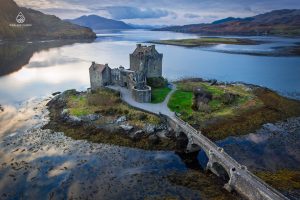
Eilean Donan is a rebuilt castle on a tidal island at Dornie, where three lochs meet. Famous, photogenic, still worth the stop if you pick... Continue reading
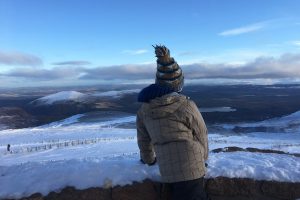
Cairn Gorm is the named summit above Aviemore. The plateau is the real mountain. The car park is only the start. Continue reading
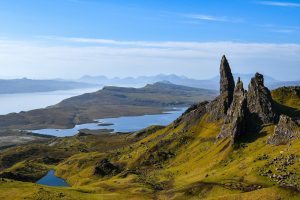
Skye is not named after the sky. The old names point at Norse and Gaelic. The English spelling is the latecomer. Continue reading

The creel tree is Ullapool’s Christmas: stacked fishing pots on the waterfront, lights, and not a plastic fir in sight. Continue reading
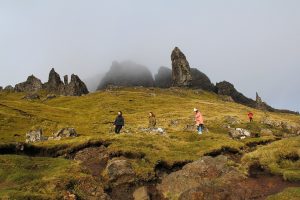
The Storr is the rock pillar on Skye’s Trotternish ridge. Steep, popular, worth it in the first hour of the day. Continue reading