
No products in the cart.
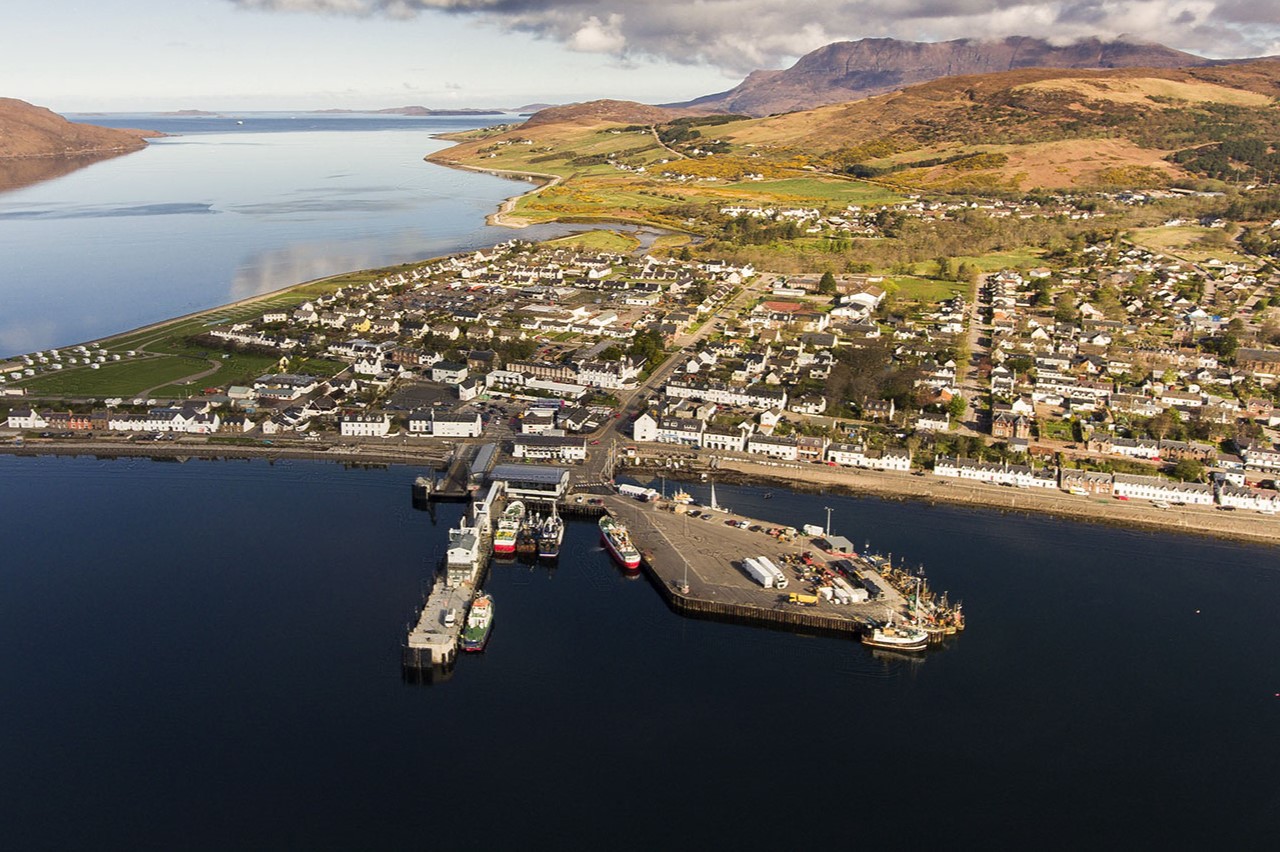
There are places in the Highlands that seem to have been arranged for a photograph. Ullapool, with its whitewashed houses along Loch Broom and mountains rising across the water, can certainly look that way. But spend a little time here and you’ll discover a village that’s much more than a pretty harbour.
Fishing boats still work from the pier. The ferry comes and goes across the Minch. People stop for coffee, collect their shopping, head to work or walk along Shore Street to see what the weather is doing.
Ullapool is where Highland Candle Company is based, so it’s a place we know beyond the usual visitor attractions. And while the surrounding landscape is extraordinary, much of the village’s character comes from the ordinary business of living beside the sea.
Where is Ullapool?
Ullapool sits on the eastern shore of Loch Broom in the north-west Highlands of Scotland, approximately 55 miles from Inverness by road.
It’s one of the main settlements in Wester Ross and a natural stopping point for people travelling along the North Coast 500, exploring the mountains of Assynt or catching the ferry to the Outer Hebrides.
The village itself is compact. You can walk around its central streets quite comfortably, with the harbour, shops, cafés and waterfront all close together.
What makes Ullapool particularly appealing is how quickly the landscape changes once you leave. Within a short drive, the neat streets give way to remote glens, rocky coastlines and some of the most distinctive mountains in Scotland.
The history of Ullapool: a fishing village founded in 1788
Ullapool’s modern history begins in 1788, when the British Fisheries Society established a planned fishing village on the shores of Loch Broom.
The settlement was designed by Thomas Telford, the Scottish engineer whose work would later include the Caledonian Canal and numerous bridges and roads across Britain.
The idea was to develop a thriving herring port, with houses, warehouses and facilities arranged around the harbour. That original planning explains the unusually straight streets and orderly layout you can still see today.
Of course, people had lived and fished around Loch Broom long before 1788. The surrounding area has a much older history, with evidence of prehistoric settlements and Norse influence surviving in local place names.
The fortunes of the fishing industry rose and fell over the following centuries. One particularly memorable chapter came during the 1970s and 1980s, when enormous foreign factory ships, known locally as Klondykers, gathered in Loch Broom to process fish.
At the height of that period, the bay could be crowded with ships from countries across Europe and beyond. Their crews became a familiar part of village life, bringing trade, unfamiliar languages and a very different atmosphere to the harbour.
It’s a fascinating piece of local history, and one that still features prominently in people’s memories of Ullapool.
Ullapool Harbour and the Stornoway ferry
The harbour remains at the heart of the village.
It supports commercial fishing, visiting boats and marine services, while also serving as the mainland departure point for the CalMac ferry to Stornoway on the Isle of Lewis.
The ferry is a substantial presence. Watching it arrive or depart from Shore Street is part of the Ullapool experience, especially when the harbour is busy.
There’s a contrast here that you don’t always find in popular coastal destinations. The waterfront has cafés, places to eat and views worth stopping for, but the harbour is still a working one. Fishing gear, boats, deliveries and ferry traffic are part of everyday life.
If you’re travelling to Lewis, book your crossing in advance and check the latest timetable and service updates on the CalMac Ullapool–Stornoway route page.
Things to do in Ullapool
You don’t need an elaborate itinerary to enjoy Ullapool. In fact, one of the better ways to experience the village is simply to spend a few hours wandering around it.
Walk along Shore Street
Start at the waterfront. The row of white buildings along Shore Street, with Loch Broom immediately in front of them, is probably Ullapool’s most recognisable view.
On a calm day, the water can be remarkably still, reflecting the hills on the far side of the loch. On a windy day, the waves make themselves known along the shore.
You’ll find places to stop for food or a drink, and it’s a good spot to watch the comings and goings of the harbour.
Visit Ullapool Museum
For a better understanding of the village, head to Ullapool Museum on West Argyle Street.
The museum occupies a former church designed by Thomas Telford and contains exhibits exploring the social history of Ullapool and Loch Broom.
There’s material covering the fishing industry, crofting, the Klondyker years and the people who shaped the community. It also tells the story of the Hector, a ship that carried emigrants from Loch Broom to Nova Scotia in 1773.
It’s an excellent place to appreciate how much history sits behind what appears, at first glance, to be a relatively simple Highland village.
Check the museum’s visitor information for seasonal opening arrangements.
Walk up Ullapool Hill
If you’d like to see the village from above, the paths on Ullapool Hill offer some wonderful views over the harbour and Loch Broom.
The hill rises directly behind Ullapool, and you can begin the walk from the village without needing to drive anywhere.
It’s a proper uphill walk rather than a gentle promenade, but you don’t have to reach the highest point to enjoy the view. As you gain height, the grid of streets becomes clear below you, with the ferry pier stretching into the loch and mountains beyond.
There are several route options, including a longer circuit towards the Braes of Ullapool. The local Ullapool Hill walking guide provides route information.
Explore the shops, galleries and local food
Ullapool has a good selection of independent businesses for a village of its size.
You’ll find bookshops, galleries, cafés and places selling locally made work. An Talla Solais is particularly worth knowing about if you’re interested in art, with exhibitions and creative events taking place throughout the year.
Seafood is an important part of the local food scene, which is hardly surprising given the harbour’s history. There are also pubs and restaurants where you can settle in for an evening rather than rushing on to the next destination.
Opening days can vary outside the main visitor season, so it’s worth checking individual businesses before making a special journey.
Take a boat trip towards the Summer Isles
One of the best ways to appreciate the surrounding coastline is from the water.
Boat trips departing from Ullapool explore Loch Broom and the waters around the Summer Isles, a collection of islands lying to the northwest of the village.
The scenery is quite different when viewed from the sea, with steep hills rising directly from the coastline and small islands scattered across the water.
Depending on the season and conditions, there’s also the possibility of seeing seals, dolphins, porpoises and seabirds. Wildlife sightings are never guaranteed, but the coastal views alone make a trip worthwhile.
Places to visit near Ullapool
Ullapool makes an excellent base for exploring the north-west Highlands. Some of the region’s most memorable places are within easy reach by car.
Corrieshalloch Gorge
About 12 miles south of Ullapool, Corrieshalloch Gorge is a dramatic, steep-sided canyon with a Victorian suspension bridge overlooking the Falls of Measach.
It’s a relatively short visit, but the scale of the gorge and the waterfall makes it well worth stopping for. The National Trust for Scotland manages the site.
Assynt and the Bone Caves
Travel north towards Loch Assynt and you’ll enter a landscape of ancient rock, isolated mountains and limestone valleys.
Near Inchnadamph, the Bone Caves can be reached on a hillwalk into the Allt nan Uamh valley.
The caves have yielded the remains of animals that lived in Scotland thousands of years ago, including reindeer, wolves and bears. It’s a remarkable place to visit, although the final approach is steep and rocky.
Coigach and Stac Pollaidh
Northwest of Ullapool lies Coigach, one of the most beautiful parts of the Highlands.
The unmistakable outline of Stac Pollaidh rises above the surrounding lochs, while the road towards Achiltibuie reveals views of the Summer Isles and the mountains of Assynt.
It’s worth allowing time for this area rather than treating it as a quick detour. The roads are narrow in places, and much of the enjoyment comes from stopping to appreciate the landscape.
Ullapool at Christmas
Ullapool has one particularly unusual Christmas tradition: a tree made from fishing creels.
Instead of an ordinary fir tree, hundreds of the traps used to catch shellfish are stacked into a large illuminated structure on the waterfront, complete with a crab-shaped decoration at the top.
It’s a fitting Christmas landmark for a fishing village, and the switch-on has become a much-loved local event.
We’ve written more about the story behind Ullapool’s creel Christmas tree.
Planning your visit to Ullapool
Most visitors arrive from Inverness along the A835. The journey takes roughly an hour and a quarter to an hour and a half in normal conditions, although it’s worth allowing longer for traffic, weather and stops along the way.
Parking is available around the village, but the busiest summer days can bring considerable demand, particularly when ferry traffic and North Coast 500 visitors coincide.
If you’re travelling in July or August, it’s sensible to book accommodation ahead. The same applies to the Stornoway ferry, particularly if you’re taking a vehicle.
Weather is another consideration. Ullapool can have beautiful calm mornings, heavy showers and strong winds all within the same day. Bring a waterproof jacket even when the forecast looks promising.
And if you’re visiting in summer, don’t forget the midges. They’re most troublesome in sheltered spots when the air is warm and still.
Is Ullapool worth visiting?
Yes, although we’d suggest giving it a little more time than a quick stop for fuel or a photograph.
A few hours will let you explore the waterfront, visit some shops and enjoy something to eat. A full day provides time for the museum, a walk above the village or a trip out on the water.
Stay longer and Ullapool becomes a useful base for exploring Coigach, Assynt and Wester Ross, with plenty of spectacular places within reach.
For us, Ullapool isn’t simply somewhere to recommend to visitors. It’s home to Highland Candle Company, and the surrounding coast, hills and harbour are part of the landscape behind the business.
The white houses and mountains might be what bring people here. The working harbour, local history and everyday life of the village are what give Ullapool its character.


About author

Related posts
Eilean Donan is a rebuilt castle on a tidal island at Dornie, where three lochs meet. Famous, photogenic, still worth the stop if you pick... Continue reading

Cairn Gorm is the named summit above Aviemore. The plateau is the real mountain. The car park is only the start. Continue reading

Skye is not named after the sky. The old names point at Norse and Gaelic. The English spelling is the latecomer. Continue reading

The creel tree is Ullapool’s Christmas: stacked fishing pots on the waterfront, lights, and not a plastic fir in sight. Continue reading
The Storr is the rock pillar on Skye’s Trotternish ridge. Steep, popular, worth it in the first hour of the day. Continue reading