
No products in the cart.

Hidden among the limestone hills of Assynt, north of Ullapool, are a series of caves that have revealed an extraordinary glimpse into Scotland’s distant past. Known as the Bone Caves, these openings in the cliffs above the Allt nan Uamh valley have yielded the remains of animals that once roamed the Highlands, including reindeer, lynx, wolves and even polar bear.
Today, they’re reached by a beautiful walk through a quiet Highland glen. The caves themselves aren’t enormous, but knowing what was discovered beneath their floors makes standing at their entrances a rather remarkable experience.
Why are they called the Bone Caves?
The name comes from the animal bones discovered during excavations, beginning in the late nineteenth century.
Among the finds were remains of creatures that seem almost impossible to imagine living in Scotland today. Reindeer, Arctic foxes, wolves and bears were once part of the landscape, during periods when the climate was very different from what we experience now.
Perhaps the most surprising discovery was material identified as belonging to a polar bear, although the identification of some ancient remains has been the subject of scientific study and debate.
Human bones and artefacts have also been discovered, providing evidence of people using the caves thousands of years ago.
These findings have helped researchers understand how Scotland’s wildlife and environment changed during and after the Ice Age. The caves are important not simply because of the bones themselves, but because the layers of sediment preserved clues about the conditions in which those animals lived.
How were the Bone Caves formed?
The caves lie in the limestone cliffs of Creag nan Uamh, which translates from Gaelic as the Crag of the Caves.
Limestone can gradually dissolve when water passes through cracks and fissures. Over thousands of years, this process created underground passages through the rock.
As the surrounding valley was worn deeper, parts of the original cave system were exposed, leaving the openings we see high above the valley floor today.
One of the interesting features of the walk is how the water behaves. The Allt nan Uamh burn disappears underground in places, travelling through the limestone before emerging again at a substantial spring known as Fuaran Allt nan Uamh.
It’s a lovely example of the unusual geology found throughout Assynt, where water, limestone and ancient rock formations have shaped a landscape quite different from much of the rest of the Highlands.
The walk to the Bone Caves
The walk begins from a small car park beside the A837, approximately four kilometres south of Inchnadamph, on the road between Ullapool and Loch Assynt.
From the car park, the path follows the Allt nan Uamh upstream into a broad, open glen. The first section is relatively straightforward, passing a small waterfall before continuing towards the pale limestone cliffs further up the valley.
As you walk, the surrounding hills gradually close in. You’ll pass the remarkable spring where water emerges from beneath the limestone, before the dark openings of the Bone Caves become visible in the cliffs ahead.
The final approach is the most demanding part. A narrow, rocky path climbs across a steep slope to reach the cave entrances. This section can be slippery, particularly after rain, and there are steep drops and a risk of falling rock.
The complete walk is approximately 4.5 kilometres, with around 200 metres of ascent. Allow roughly one and a half to two hours, or longer if you’d prefer to take your time.
For a detailed route description, including directions and a walking map, see the Bone Caves walk on Walkhighlands.
Can you go inside the Bone Caves?
The main cave entrances are relatively shallow, and it’s possible to look inside some of them without venturing far from daylight.
However, the ground can be wet, uneven and slippery. There’s also no need to explore deeper passages to appreciate the place.
The caves form part of a protected Site of Special Scientific Interest, so it’s important not to dig into the floors, disturb the sediments or remove anything from the site.
Much of the enjoyment comes from reaching the openings and looking back across the glen, imagining how different the landscape must have been when some of the animals whose remains were found here were still alive.
What should you know before visiting?
Although the walk isn’t particularly long, it’s still a hillwalk rather than a gentle stroll along a maintained visitor path.
Wear proper walking shoes or boots with good grip, and bring suitable clothing for changing Highland weather. The final approach deserves particular care, especially when the ground is wet.
In icy or very windy conditions, the narrow path below the cliffs can become dangerous. There’s nothing wrong with turning back and enjoying the glen without reaching the caves themselves.
There are no staffed visitor facilities at the caves, so bring anything you’ll need for the walk and take your rubbish home.
Are the Bone Caves worth visiting?
Very much so, especially if you enjoy places that combine a beautiful walk with something genuinely interesting to discover.
Assynt is famous for its extraordinary mountains, including Suilven, Quinag and Ben More Assynt. The Bone Caves offer a different way to experience the region, revealing something of the ancient history beneath those familiar hills.
They’re also an excellent place to visit if you’re staying in Ullapool and looking to explore a little further north.
The caves themselves may be modest in size, but their story certainly isn’t. It’s quite something to stand in a Highland glen and realise that the ground beneath your feet once held the remains of animals we’d now associate with the Arctic or the forests of northern Europe.


About author

Related posts
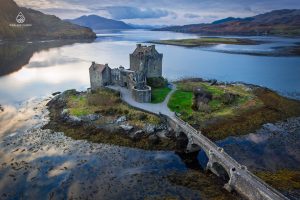
Eilean Donan is a rebuilt castle on a tidal island at Dornie, where three lochs meet. Famous, photogenic, still worth the stop if you pick... Continue reading
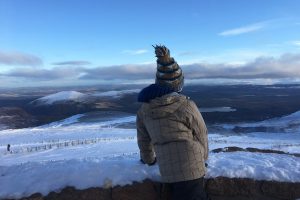
Cairn Gorm is the named summit above Aviemore. The plateau is the real mountain. The car park is only the start. Continue reading
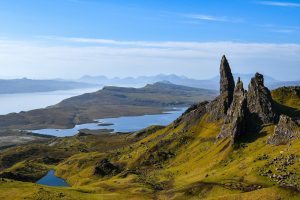
Skye is not named after the sky. The old names point at Norse and Gaelic. The English spelling is the latecomer. Continue reading

The creel tree is Ullapool’s Christmas: stacked fishing pots on the waterfront, lights, and not a plastic fir in sight. Continue reading
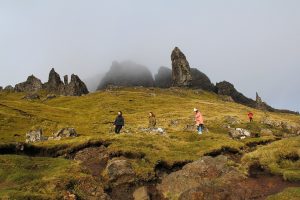
The Storr is the rock pillar on Skye’s Trotternish ridge. Steep, popular, worth it in the first hour of the day. Continue reading