
No products in the cart.

A candle can be burning quite happily on a sideboard until someone opens a door. Suddenly, the flame starts dancing, leaning to one side or producing a little trail of smoke.
It doesn’t take much moving air to disturb a candle. An open window, a nearby extractor fan or even a draught travelling through a hallway can make a difference.
Keeping candles away from draughts is one of the simplest ways to help them burn steadily, and it can prevent some of the most common candle problems.
Why are draughts bad for candles?
A candle flame needs oxygen to burn, but it also needs a reasonably stable supply of air.
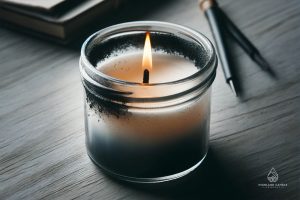
When a draught disturbs the flame, it changes how air moves around the burning wick. This can interfere with combustion, making the flame flicker, lean or produce more soot than usual.
You might notice black marks collecting around the inside of the jar, particularly if the flame is constantly moving.
Strong air currents can also affect how evenly the wax melts. A flame repeatedly leaning in one direction may heat one side of the candle more than the other, although this doesn’t automatically mean the candle will develop a tunnel.
A little flickering is perfectly normal. It’s the persistent, exaggerated movement that’s worth paying attention to.
Where should you avoid placing candles?
Some of the draughtiest places in a house aren’t immediately obvious. You don’t necessarily need an open window to have air moving through a room.
A few positions worth avoiding include:
- Windowsills: Particularly beside open windows or curtains that could move towards the flame.
- Hallways and doorways: Opening and closing doors can create sudden movements of air, even when the rest of the house feels still.
- Near extractor fans or ventilation outlets: These can create a constant airflow that disturbs the flame.
- Beside heating systems: Radiators and other heat sources can create rising air currents, while nearby vents may blow directly across a candle.
- Busy areas: Apart from disturbing the air, people passing close to a candle increase the risk of accidentally knocking it over.
If you live in an older Highland house, you’ll probably know that draughts have a talent for appearing in places you’d least expect. Sometimes moving a candle to the other side of the room is all that’s needed.
How can you tell if a draught is affecting your candle?
The easiest thing to watch is the flame itself.
A properly burning candle generally has a steady, teardrop-shaped flame with a little natural movement.
If the flame continually leans to one side, flickers violently or produces visible black smoke, moving air may be contributing to the problem.
However, draughts aren’t the only possible explanation. Wick length, carbon build-up and the candle’s formulation can also affect flame stability.
We’ve explained these differences in our articles about why candles flicker and why candle jars turn black.
What should you do if your candle keeps flickering?
First, extinguish the candle safely and allow the wax and container to cool completely before moving it.
Choose a more sheltered position on a stable, heat-resistant surface, well away from anything flammable. Make sure the wick is at the manufacturer’s recommended length before relighting.
If the flame settles down in its new position, a draught may well have been the cause.
If it continues burning with an unusually large flame, excessive smoke or other signs of overheating, stop using the candle and contact the manufacturer for advice.
One final point: keeping a candle away from draughts doesn’t mean shutting every window and sealing up the room. Candles should be used in properly ventilated spaces, simply away from strong, direct air currents.
Find a sheltered spot, keep the surroundings clear and let the candle burn without the front door having a say in it.


About author

Related posts
Black glass is soot. Trim the wick, move it off the draught, wipe the jar. It is not the fragrance’s fault. Continue reading

Wet spots are air between wax and glass. They look like a fault. They are not. The candle will still burn. Continue reading

Candles do not expire like milk. They fade, they dust, they bloom. Most of them are still fine to burn. Continue reading

Cold throw is the lid sniff. Hot throw is the room. They are not the same, and soy is often quieter on the lid. Continue reading

Usually yes, better in the hold. Wrap them, lid on, and check the airline because staff can still say no. Continue reading