
No products in the cart.
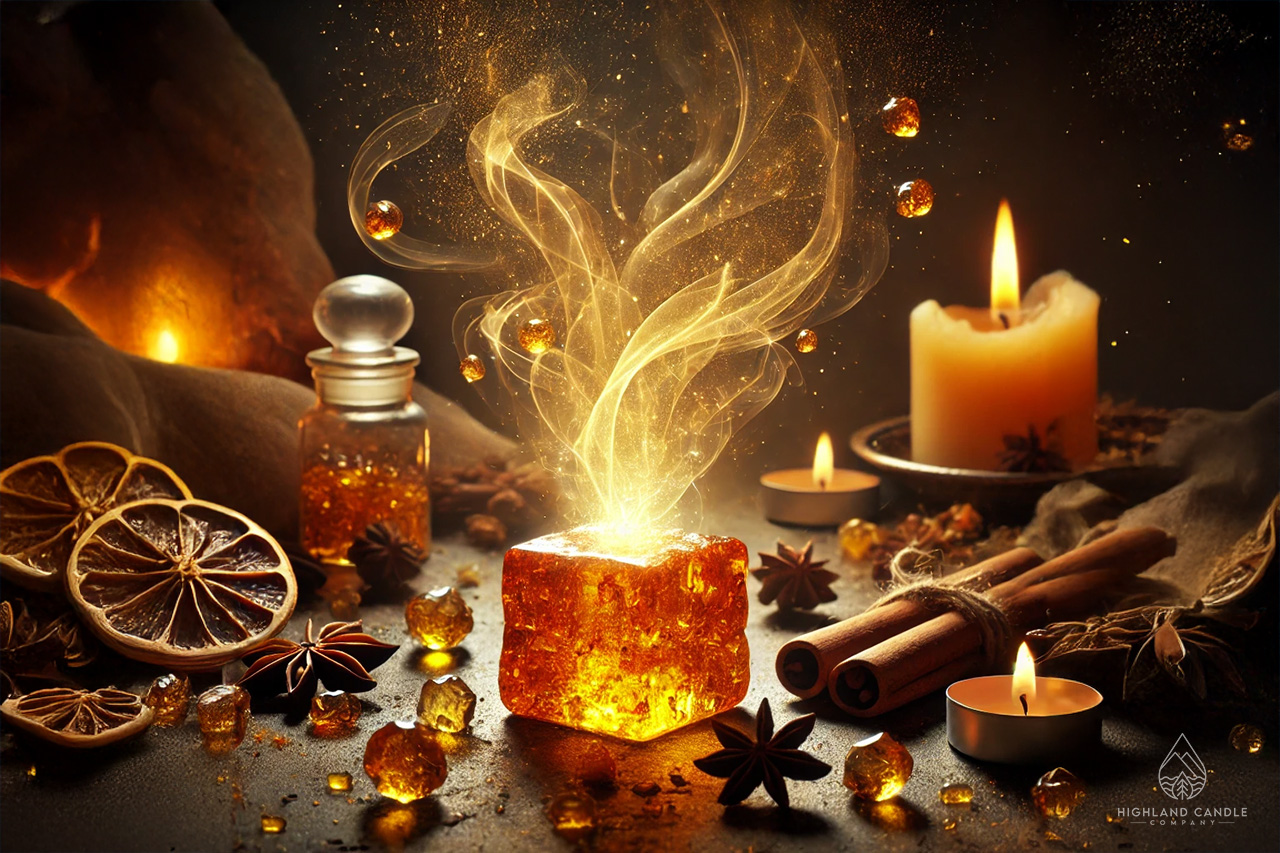
Amber, in a candle, is not the gemstone. The stone barely smells. “Amber” on a label means a warm accord: resins, a vanilla-ish sweetness, sometimes labdanum (a sticky rock-rose gum that smells like skin and balsam). Think of a wool coat that has been hanging on a radiator, not a necklace.
The actual smell
- Resin / balsam — rounded, slightly churchy, never smoky like incense unless they added incense.
- Soft vanilla — not cake. More like the sweetness inside old wood.
- Labdanum leather-skin — the grown-up part. Without it, amber is just beige gourmand.
It sits next to benzoin, myrrh and frankincense on the shelf, but amber is sweeter and less liturgical. Frankincense is lemon-pine-church. Amber is honeyed radiator.
In a candle
Base and heart. It throws slowly and then stays. A good amber candle will still be in the curtains the next day. That is the point, and also the warning — if you hate it, you will be living with it.
In soy-coconut the sweetness can bloom too far if the wick is greedy. Keep the wick trimmed so the pool is molten, not roaring. First burn to the edges or you get a ring of pale unused wax and a hot centre that smells like burnt sugar.
In a room
Winter. Late afternoon. It wants textiles — rugs, curtains, a sofa that has seen things. It is too heavy for a small bathroom and it will argue with cooking.
If you want warm-without-dessert in one of ours, The Crofter’s Year is the seasonal, lived-in one, and Aurora Borealis is the cold-night version.
Quick answers
Does amber smell like vanilla? Partly. If it only smells like vanilla, they skipped the resin.
Ambergris vs amber? Different things. Ambergris is a rare marine note, salty and animal. Candle amber is a lab accord. Almost nobody is putting ambergris in a £20 jar.


About author

Related posts
Peppermint is sweet mint and menthol, not toothpaste. Here is how it should smell in a room. Continue reading
Rosemary is pine-herb and camphor, not Sunday lamb. Here is how it smells in a candle. Continue reading
Frankincense is lemon-pine resin, not campfire. Here is what it smells like when you burn it in a jar. Continue reading
Ylang-ylang is banana-floral and pollen, not generic tropical. Here is the honest candle version. Continue reading
Jasmine is night flower and a bit of animal, not shampoo. Here is how it should smell in a jar. Continue reading