
No products in the cart.
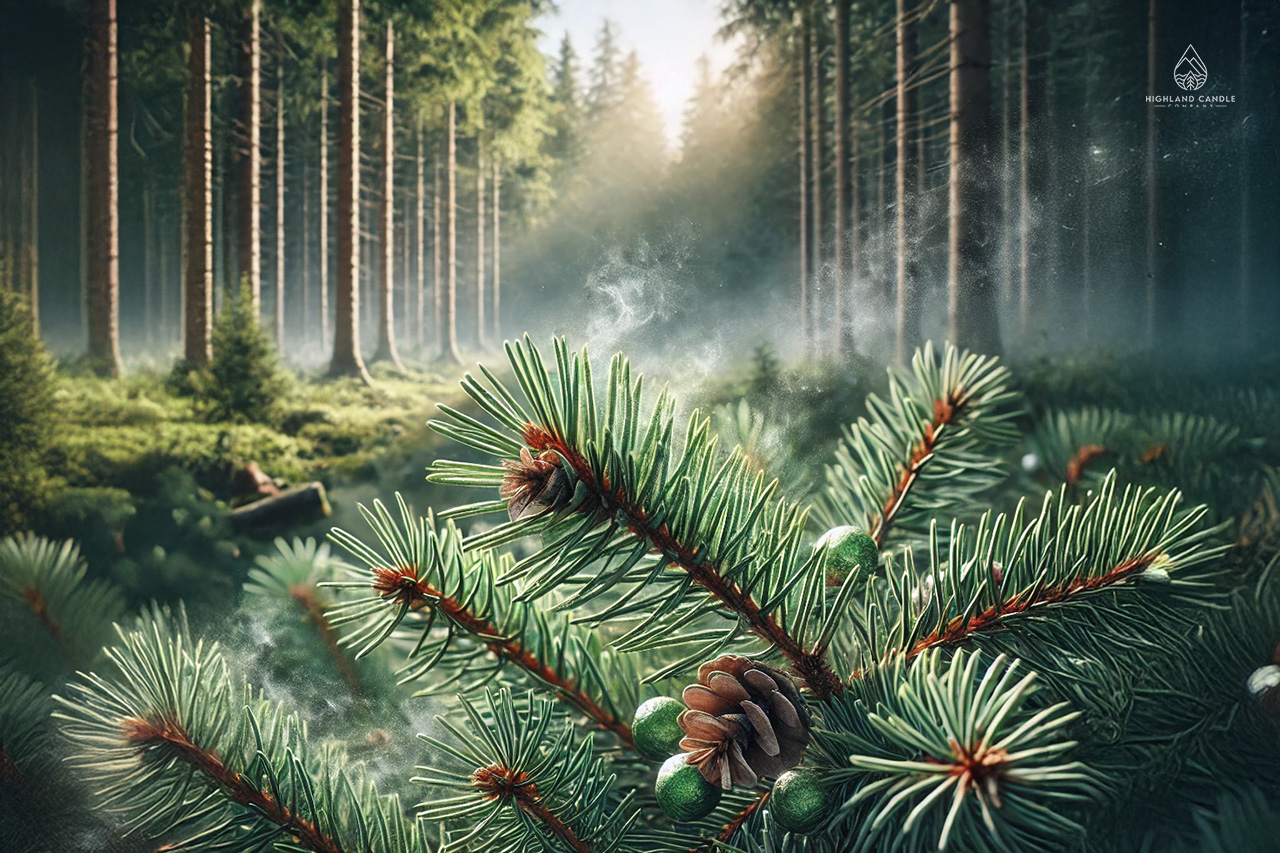
Pine smells of snapped needles and sticky sap, with a cold green edge that sits in the back of your throat. Walk through a plantation after rain and you will get it immediately: turpentine-bright at first, then forest floor, then a quiet sweetness from the wood itself.
The car-freshener version is a single chemical (often pinene plus cheap soap). Real pine is messier. It has dirt in it. That is why it works.
The actual smell
- Needle / green — sharp, almost citrus at the top.
- Resin and sap — the sticky bit, slightly medicinal.
- Dry wood and bark — what is left when the Christmas-tree note has gone.
Spruce is icier. Fir is sweeter and more “December”. Scotch pine, which is what you actually meet in the Highlands, is drier and more resinous. If a candle is just “Christmas”, they used fir and orange and called it pine.
In a candle
Top and heart. It throws well because those needle notes are volatile — you will smell it from the hall. The risk is a one-note blast that disappears, leaving bland wax. A decent formula keeps some bark and wood in the base so the end of the burn still smells like a tree and not like a plugin.
Soy-coconut takes pine cleanly. Paraffin can make it smell harsher. Either way: full melt pool on burn one, wick trimmed, no draught or you get a sooty jar and a “burnt tree” note nobody asked for. We wrote that up properly in why jars turn black.
In the Highlands
This is not an abstract scent for us. Caledonian pine is the old forest. Plantation sitka is the one you walk through because it is there. They do not smell the same. A candle that wants to be honest about this place should lean dry resin, not tinsel.
Cairngorms and Nevis live on that hill-air side of the map.
Quick answers
Pine vs cedar? Pine is greener and brighter. Cedar is drier, pencil-like, more attic.
Why does my pine candle smell like disinfectant? Too much isolated pinene, no wood base, wick too hot. Blow it out, trim, relight shorter.
About author

Related posts
Peppermint is sweet mint and menthol, not toothpaste. Here is how it should smell in a room. Continue reading
Rosemary is pine-herb and camphor, not Sunday lamb. Here is how it smells in a candle. Continue reading
Frankincense is lemon-pine resin, not campfire. Here is what it smells like when you burn it in a jar. Continue reading
Ylang-ylang is banana-floral and pollen, not generic tropical. Here is the honest candle version. Continue reading
Jasmine is night flower and a bit of animal, not shampoo. Here is how it should smell in a jar. Continue reading